Pearl Jam Road Trip: Part Four - by Kevin Montavon

(Click here for previous Pearl Jam Road Trip)

Our National Parks have been called “America's Greatest Idea”. That's a sentiment that I can get behind. The setting aside of public lands for the enjoyment of all people is imperative in this day and age of unchecked development (do we REALLY need more condos?). So, since our government has seen fit to provide us with these places, I decided that I should see as many as possible. I have been working on that for a few decades now.

Yellowstone National Park was the first such set-aside tract in the US. Sitting in the Northwest corner of Wyoming, and extending into Idaho and Montana, it is a park that is larger than the entire states of Rhode Island and Delaware combined. A magical place of geysers, hot springs, waterfalls, lofty mountain peaks, and abundant wildlife, Yellowstone has something for everyone. However, it seems that year after year, everyone wants something from it. Our first National Park suffers from an overcrowding problem. In the busy summer months, it can become choked with automobile traffic and crowds. Old Faithful Geyser, the most famous such natural feature on Earth, now attracts crowds so large during the peak season of July and August that bleachers needed to be built to accommodate them. It looks like an ampitheater there now.

In our travels, Heather and I try to avoid crowds as much as possible. We drive the back roads, we choose activities within popular areas that are off-the-beaten path. We pull over and let cars pass us when we are cruising through the National Parks. In Yellowstone however, this is becoming harder and harder to do. We have visited three times before, and have seen most of the popular tourist stops in the park, so this time we decided we wanted to take a hike and really get away from it all. Destiny had other plans...

We arrived in the park early enough, entering through the popular East gate. The approach road is undergoing some major construction, so we weren't able to just “cruise right in.” Once we had stopped at the entrance sign for our photo (always have to take a picture with the sign at National Parks) and then the Visitor Center at Fishing Bridge for our Passport Stamp (a stamp cancellation that shows the date you visited the park...we have collected hundreds), we made the turn into the Hayden Valley and headed North. We were immediately caught in a traffic jam. Seems a herd of Bison had decided that this was the perfect time to cross the road. When dozens of these 1,000 pound beasts want to cross the road, there really isn't much you can do except wait. So wait we did. After about 40 minutes, enough Buffalo had cleared the road that cars were able to pass, so we continued North. We stopped into Artist Point in the Grand Canyon of The Yellowstone to take photos of the Lower Yellowstone falls. But the crowds were so dense there that we immediately regretted the decision. We still took our photos but got out of there as quickly as we could. A little further up the road, we just cruised right on by the turnoff for the Upper Falls/Canyon Rim drive. Just way too many cars choking the road. Another quick stop at Tower Falls went much the same way, but we did get out of the car there and take some photos as well. 

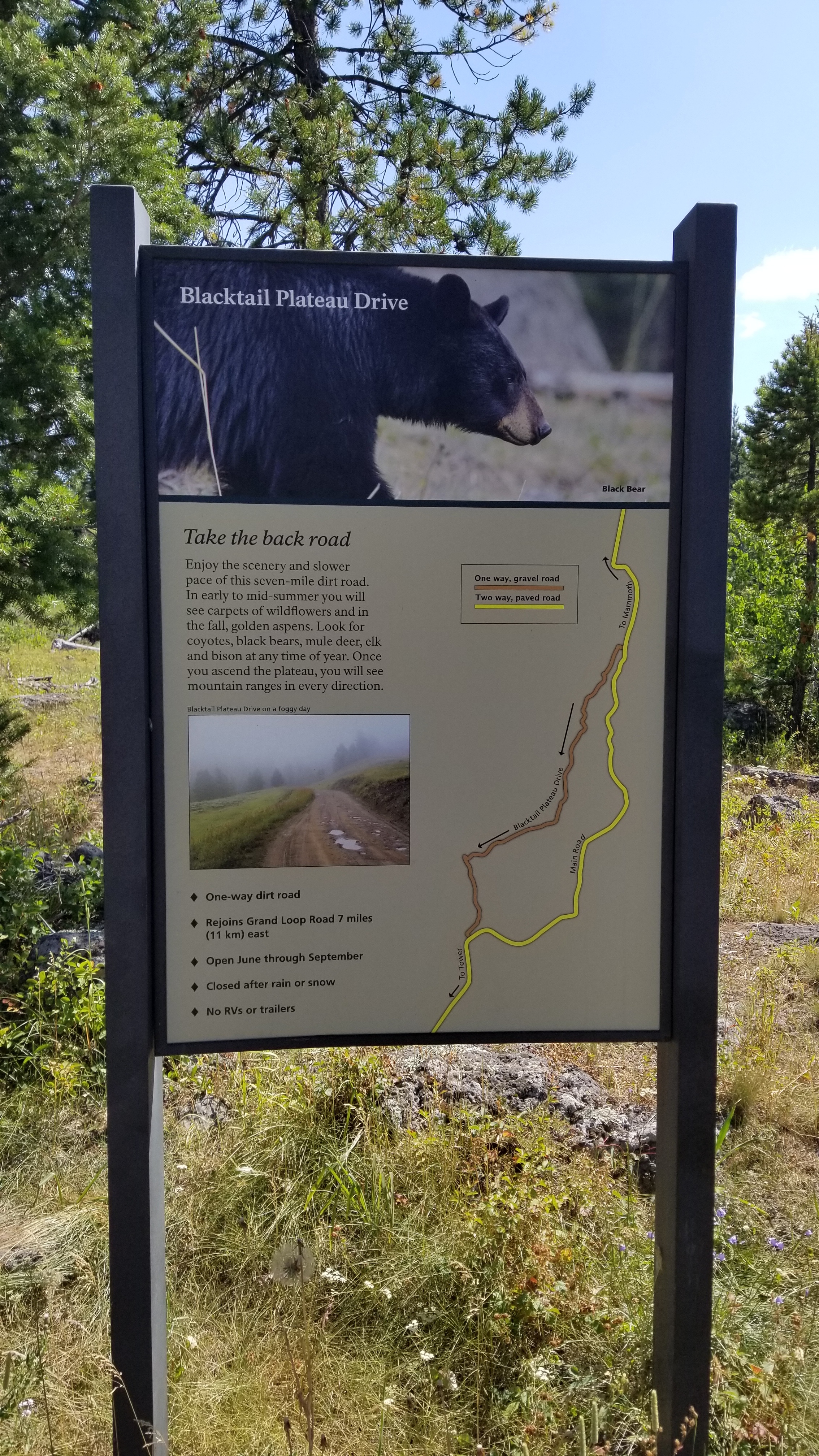
Then fate took a turn. The hike that we wanted to take was closed! Due to bear activity! So on we drove. What we ended up doing was driving a one-way dirt road called The Blacktail Plateau Drive. While this got us away from the crowds, there were still more cars on that road than we normally see on National Park back roads. Unfortunately I think the secret is out. 

Overall, despite the setbacks, it was a wonderful day. We even were able to drive most of the remainder of the main park loop road before nightfall. Then it was back to our cozy cabin in Cody (say that 10 times fast). Tomorrow is a drive through Grand Teton, and on to Seattle for the real reason we are trekking...Pearl Jam!

20180806_112949.jpg
20180806_120928.jpg
20180806_153019.jpg

Pearl Jam Road Trip: Part Three - by Kevin Montavon

(Click here for previous Pearl Jam Road Trip)

"The Mountains are calling, and I must go." - John Muir

I am a child of the mountains. Now, I don't mean that I grew up in the mountains, although I do hail from the rolling hills of Southern Ohio, which, as my Father impressed upon me at an early age, are a part of the foothills of The Appalachian Mountains. More importantly however, during my formative years, Dad took me and my younger brother on two annual trips to The Great Smoky Mountains National Park, once in the Summer and once in the Fall...to "see the leaves change" as he liked to say. These trips were usually "just us boys." My Dad, brother, and I shared a special bond with each other and with the mountains, which only grew stronger with each trip. 

One of the highlights of any Smokies trip is a drive over the Newfound Gap Road, which is a high mountain road that traverses the border of Tennessee and North Carolina. Dad - and later when we were old enough to drive - my brother and I loved to make a day of it. Naturally, when I got older and started taking my own vacations, I was drawn to destinations with lofty vistas. In the last two decades I have driven on as many high mountain parkways as my stomach could handle. Some people like roller-coasters: I like driving, or even better, riding shotgun, in the mountains. 

One such road that I have eyed on the map since I was a kid is The Beartooth Highway, a road that runs along a stretch of border between Montana and Wyoming, and crosses Beartooth Pass at nearly 11,000 feet above sea level. It is one of the highest mountain roads in The United States, and it is only open for a small window of time in the summer. For various reasons Heather and I had never been able to drive it in the previous three times we visited the Yellowstone region, so this time I had my heart set on it. 

We began the day at a rest area on I-25 south of Buffalo, Wyoming. Interestingly, the town was not named for Buffalo Bill, as was the nearby tourist town of Cody, but rather because when the time came to choose a name for their new settlement, the 30 citizens of the town put suggestions in a hat, and one man wrote his hometown of Buffalo, New York. A little farther north, near the large-by-Wyoming-standards town of Sheridan, we turned off onto US Route 14 and headed west into the town of Dayton. We always enjoy finding towns with Ohio names when we travel. Dayton, Wyoming is an exponentially smaller place than its Ohio namesake, but still large for Wyoming. Keep in mind that the entire state, which is over twice the size of Ohio, has a population smaller than the city of Columbus. These stats, however, don't take into account the millions who visit annually, but more on that in a future post. 

West of Dayton, Route 14 and Alt Route 14 are known as The Bighorn Valley Scenic Byway. I am a big fan of guidebooks, and one that we brought with us on this trip is a National Geographic "Scenic Byways Of The United States" guide, which covered both this drive and The Beartooth. So we were able to stop at points of interest as we drove, and already knew something about them. 

Shortly after leaving Dayton, we encountered a large number of cars parked on the side of the road, and people standing outside taking photos towards the woods. We thought it must be a bear siting, or "Bear Jam" (named for the traffic jams bear sitings cause in National Parks), but it wasn't. It was, however, a beast just as elusive...a Bull Moose! We have seen several Moose in the wild during previous travels, but they were almost always Cows, and even once a Cow and Calf. We had even seen two Bulls together years ago at Rocky Mountain National Park, but they were behind a lot of tree cover and we couldn't get a full look at them. But this guy was right out in the open munching on some Willow branches. I hate to admit it, but we spoiled it for everyone when we pulled over. Bullwinkle looked right at us as I was trying to snap his photo, and began walking away...right behind our car! We then rolled on, leaving everyone there cursing us I am sure.

About 50 miles west on the Alt 14, we came to Medicine Wheel National Historic Site, which is an ancient circle of rocks (placed there by people, not a natural formation) that is sacred to nearly all Native American tribes. Some wait their entire lives to visit "The Wheel," and it is considered such hallowed ground that some purify themselves for up to a year in preparation for their pilgrimage. After driving the side road up Medicine Mountain, we came to the visitors center, which was a glorified hut manned by two friendly rangers. One of the rangers greeted us and the others who arrived at the same time as us and explained the basics. It was a three-mile round-trip hike along the rest of the mountain road, uphill both ways. That wasn't hyperbole, as the road was laid out like the letter M. She also impressed upon us the sacred nature of the place and said that they have Native Americans come almost daily to pray and make offerings, so we should treat it with the same respect as we would any church. The hike itself wasn't terribly strenuous, as we had been preparing ourselves with hikes in Ohio over the Spring and Summer. When we reached The Wheel we were the only ones there for a few minutes, and the spiritual nature of the place was best described as eerie. The various prayer ribbons and offerings were interesting to see, and even moving. Typical offerings included tobacco, sage, bundles of herbs, flowers, and animal skulls (there were several big cattle ones). We took photos and had our moment to reflect, and back down the mountain we went. 

A little further northwest we came to the town of Red Lodge, Montana, where The Beartooth Highway begins. Having waited for this drive for two decades, I can say that The Beartooth lives up to the hype. At this point in the story I should point out that Heather was driving, as nothing fazes her behind the wheel, and I nearly screamed like a little girl when I looked down at the road getting smaller and smaller way down below. After stopping at some overlooks and snapping some photos (which never do the real view any justice), we turned off the Beartooth just before Cooke City and Silvergate, Montana, which are the service towns for the northeast entrance to Yellowstone National Park. The original plan for today was to go on into Yellowstone and see the Lamar Valley before checking into our cabin near Cody, but the breathtaking views on The 'Tooth had made us lose track of time, and it was approaching evening. We headed southeast and made it to the cabin just after 9:00 pm. It was great to lay down in the super-comfy bed after two nights in the car. I fell asleep before my head hit the...

20180805_173638.jpg
20180805_120350.jpg
20180805_175612.jpg

Pearl Jam / National Park Road Trip: Part Two - by Kevin Montavon

Pearl Jam / National Park Road Trip: Part Two.    (Click here for part one)

Any good road trip requires some night-driving. As an avowed road hog, I learned a long time ago that you can put some serious miles behind you by driving at night, and keeping pace with the trucks. 

With that in mind, this trip began at 9 pm in Columbus, and by 8:30 am we were having breakfast in Omaha, Nebraska. After that it was an all-day slog through Nebraska. I have been reading about the Lincoln Highway (US Route 30), which was the first cross-country highway in the United States.  The stretch across the center of Nebraska is particularly historical, and since it pretty much runs right next to the busy Interstate 80, we decided to spend our day with a leisurely drive through the heartland of America. 

The soundtrack to any long drive can greatly enhance the experience, and I am known as a guy who can pick a song for any occasion, and today was no exception. Beginning with the Counting Crows "Omaha," and continuing with the entirety of Bruce Springsteen's album Nebraska, followed by music from other Heartland heroes like John Mellencamp and Bob Seger, we rocked the day away as I drove West. 

A road sign sign in the middle of the state directed us to the site of The Plum Creek Massacre, in which 11 homesteaders travelling along the Oregon Trail were attacked and killed, and two, a woman and child, were kidnapped by hostile Cheyenne warriors. You can read more about that here: [https://www.google.com/amp/s/www.kearneyhub.com/news/local/plum-creek-attack-unfolds-to-horror-of-soldiers/article_1c037340-3008-11e4-aa70-001a4bcf887a.amp.html]. We were virtually alone at this off-the-main-drag location, providing a quiet moment for reflection on the difficulties and challenges that early pioneers faced in the push to settle this land. It also was not lost on me that we had travelled in just a few hours what pioneers took months to traverse. It's a lot easier from the inside of an air-conditioned automobile, that's for sure.

Late in the night, we rolled into a rest area near Casper, Wyoming, where I kicked the seat back and took a snooze for a few hours. Tomorrow's destination is Yellowstone National Park, via The Beartooth Pass. Another long day of driving lies ahead, but the landscape is a wonderland. 

"Go west young man." - Horace Greely

"The West is the best" - Jim Morrison

Kevin Montavon has visited National Parks in the 48 lower states and attended over 1,500 concerts before beginning this road trip. He also sings in the band Plow Horse.

20180804_140922.jpg

Pearl Jam / National Park Road Trip - by Kevin Montavon

Kevin Montavon has visited National Parks in the 48 lower states and attended over 1,500 concerts before beginning this road trip. He also sings in the band Plow Horse. 

PROLOGUE:

On April 11th, 1992, I tuned into Saturday Night Live because 1) I was home on a Saturday night, and 2) I wanted to see the band that was scheduled to play. Having spent the previous five years spinning records on college radio, I was a fan of the emerging Seattle band Mother Love Bone, who had been at the cusp of superstardom when their lead singer Andrew Wood died of a heroin overdose on the eve of the release of their major-label album debut. I was aware that Love Bone guitarist Stone Gossard and bassist Jeff Ament had a new band, but in those pre-internet days it wasn't as easy to check out a new band as it is today. You couldn't just click on a readily available YouTube clip.....you actually had to take a chance and (*gasp*) PURCHASE records. And as of that night, I had not made the effort to check out the new band.

Their performance started innocently enough, the singer seeming almost reserved in his gas station attendant's jacket and backwards ballcap. As the song went on, the performance became more and more animated. I could tell these guys were really feeling the music. The singer seemed almost lost in a world of his own, and by the time the lead guitarist took a solo, the entranced vocalist was shaking so hard that his cap went flying off and a mop of curly hair came spilling out from underneath. There was now an added visual element, this chaotic whirlwind of action and flying hair. Meanwhile, Ament ran paces behind him like a tiger locked in a tight cage, jumping and crouching with the various moods of the song. These guys were thrashing around like the speed metal bands that I was so fond of at the time, but the song they were playing was more like something out of my older brother's Classic Rock Album collection. 

The song was called "Alive," the lead guitarist's name was Mike McCready, and the enigmatic singer was a cat named Eddie Vedder. The band of course was Pearl Jam. I bought their album Ten the next day, and a few months later saw them live for the first time. It was on the Lollapalooza II Tour; along with Red Hot Chili Peppers, Ministry, Soundgarden, Ice Cube, Front 242, and Lush. Pearl Jam were the second band on stage that day, but played as if they were the headliners. At one point during a long jam in the song "Porch," Eddie Vedder climbed the stage rigging all the way to the top, walked across the canvas roof of the stage.....which drooped low with every step, swung back down the rigging on the other side using just his arms, jungle gym style, and perched himself about 30 feet above the audience. And then.....he just let go and dropped, disappearing into the crowd. I thought for certain that he must be dead. It took ten more minutes of their set for security guards to fish him out of the massive crowd, but he emerged unscathed and finished the song! It was the single most insane thing that, to this day, I have seen someone do onstage. What I didn't know at the time was that this maniac was doing this at every show! 

I became an even bigger fan, Vedder in particular becoming a huge influence on my own forays into becoming a singer, songwriter, and performer myself. Over the years I would see them a few more times in concert, but in 2006 I took my girlfriend Heather to see them in Pittsburgh.....and I created a monster. She was so caught up in the atmosphere of a Pearl Jam concert that she became a completely obsessed fanatic. She spent months learning the words to every song, hung up pictures of Eddie at work like a lovestruck teenager, and even joined the "Ten Club" band fanclub. Since that time we have seen 12 additional Pearl Jam shows together, often traveling long distances to shows, and even basing entire vacations around seeing multiple dates. 

Which brings us to today: earlier this year Pearl Jam announced "The Home Shows" and "The Away Shows." These are 7 concerts in four cities, mostly in baseball stadiums, and one small football stadium. Heather was able to buy tickets through the Ten Club lottery system for the two shows at SafeCo Field in Seattle, as well as the show at Washington Grizzlies Stadium in Missoula, Montana, hometown of Jeff Ament.

Now, Heather and I also love to visit the National Parks of The United States. When our vacations aren't spent following bands around we use them to see our nation's impressive system of parks, monuments, memorials, historic sites, battlefields, and military cemeteries. Over the last two decades we have managed to visit most of the major units in the Lower 48 states, some multiple times. So when the opportunity presented itself to combine our two favorite things: travelling to parks, and seeing Pearl Jam concerts, we immediately set the plan in motion.

So now the tickets are procured; the car is rented; cabins, hotels, and campsites are booked, with other accommodations to be found on the fly; vacation time has been granted from our respective employers; and we are hitting the highway on The Great American Roadtrip 2018: Pearl Jam Edition! Sixteen days on the highways & byways of these United States, with stops in Yellowstone, Grand Teton, Mt. Rainier, North Cascades, Glacier, and Badlands National Parks; Devils Tower and Mt. Rushmore National Monuments; and Little Bighorn National Battlefield.

A popular saying these days is "You only live once." This is true, and I appreciate that fact and always try to make the most out of the one life I am living. I am also fond of another saying made popular by some of the great people I have met on the road, and that is, "Always go to the show." In this case, even if the show is 2,433 miles away. 

Pearl Jam performs "Alive" on SNL in 1992. Check out my entire, untilted SNL archive here: https://mega.nz/#F!9F0kETbQ!eUnTGdJvNKqI293JFgzpvw

Summer Vacation with County Trippin' !

The Pencilstorm offices will be closed for a few days for a much-needed summer break. In the meantime we leave you with the complete County Trippin' series (so far) by Nick Taggart. We post lots of cool things at Pencilstorm, but County Trippin' might be at the top of the heap. Please share these stories with your traveling friends and maybe you will visit some of these spots yourself. Thanks for supporting Pencilstorm! - Colin 

Ohio County Trippin' Part Eight: Mahoning County - by Nick Taggart

Ohio County Trippin’ Part Eight: MAHONING COUNTY

By Nick Taggart - “Youngstown Tune-Up"  - 28-29 April 2018 (Click here for previous County T)


The fish were most likely biting as we entered the county on an overcast Saturday morning along Mahoning Avenue.  We crossed over the causeway of Lake Milton, a 1,685-acre reservoir, popular among anglers, as light drops of rain speckled the water’s surface.  The only thing we were angling for, though, was breakfast, so we continued our drive east. The points of interest that caught our attention included the Jackson-Milton Middle and High School complex, built nearly a decade ago, and its neighbor, the Tri-Lakes Library, both constructed with natural stone.  A nearby water tower displayed the school’s mascot and informed all visitors this was “Blue Jay Country.”

After ducking under the turnpike, we pulled in at The Korner restaurant, a popular, unassuming eatery that appears to attract hunters and other outdoorsy types, the kind of place where it’s necessary to post a sign, “No muddy boots.”  After settling into an available booth, I went looking for the restroom and had to wait my turn behind two polite camouflage-adorned men wearing black NFL linebacker-like mascara. Had we been in the wilds, I would have bumped right into them, so well costumed they were to blend into their surroundings.

After our prerequisite coffees, Michele ordered the Sampler, which included a hotcake, two eggs, a choice of meat, and toast.  I opted for the Italian Breakfast Bowl, a combination of any style eggs over a quarter pound hot sausage patty, home fries with peppers and onions, and topped with hot pepper marinara sauce.  The diner behind me was regaling his companion with hunting tales. “I shot it and it went in and rode the ribs before it penetrated,” he said. “I saw blood coming out the side.” This narrative might have fouled my breakfast experience, especially with all that red sauce, had it not been for the supreme quality of the food (and my hunger) because I didn’t have a problem finishing every last bite in my bowl.

After our meal, we drove north on Lipkey Road with the sprawling Meander Creek Reservoir on our right.  The vast preserve provides drinking water for the county, but is also a giant tease to anglers and hunters.  Its community purpose prevents trespassing, but I read that the reservoir is well-stocked with fish, and, as we drove along its perimeter, Michele spotted a deer and wild turkey leisurely and tauntingly foraging behind a fence.

We continued north to just shy of the county border before turning into the parking lot of the Basilica and National Shrine of Our Lady of Lebanon.  It is a replica of a shrine in Harissa, Lebanon. It’s difficult to miss because out front stands a 16-foot statue of the Virgin Mary atop a 55-foot round tower, resembling a sort of inland lighthouse.  Unfortunately, the winding steps leading to the figure were closed to foot traffic, so we were left looking up the lady’s rose granite garments from below.

imgres.jpg

We stepped inside the religious gift shop.  Being the heathen infidel that I am, I am always encouraged when I don’t spontaneously burst into flames when entering such establishments.  There was another couple perusing the merchandise and I overheard them say they were looking for a gift in honor of their nephew’s first communion.  Not knowing anything about the tyke, I’m still pretty sure he’d prefer an Xbox to any combination of religious tracts or rosaries that filled the shelves, but it wasn’t my decision to make.  I did spot, however, an appropriate gift if the youngster planned to make a career in real estate. Wee statues of St. Joseph were on sale and the packaging guaranteed quick property sales if the little guy were buried somewhere on the property.  “Faith can move mountains,” the box read, “and homes!”

Good natured ribbing of another’s beliefs comes with a price tag and our tab came to $19.18.  That was the total on our receipt for a box of assorted saint notecards and a 26 oz. container of “Blessed Salt.”  The latter may have looked like an ordinary package of Stonemill Iodized Salt, but the sticker on top confirmed it had been officially blessed, in this case upon inquiry, by Chorbishop Anthony Spinosa, the head honcho at the basilica.  Both items are intended as gifts, but I feel as though we should keep at least a pinch of the latter to use at our next dinner party. (“I detect tarragon and mustard and…is that blessed salt I taste?! Oh, you must give me the recipe!”)  A warning to consumers: excessive consumption of blessed salt in one’s diet can lead to high blessed blood pressure!

After a quick swing through the chapel, we got back in our car and returned to Mahoning Avenue for our eastward march toward the county seat.  Along the way, we passed through the city of Austintown and a corridor of commerce that includes an everlasting string of ubiquitous Auto Zones and Burger Kings and Chevrolet dealerships.  As we passed the cross street of Belle Vista Avenue, I could understand how the road got its name, for ahead of us was a clear view down to the Mahoning River Valley and the skyline of Youngstown.

We weren’t sure what to expect of the city.  Neither Michele nor I had ever been to this part of the state and no matter how many of my friends I surveyed, neither had any of them.  All I thought I knew was based on half-remembered rumors and innuendo. The area used to be run by the Mob, right? The collapse of the steel industry decimated the local economy, right?  Well, sort of yes to both of those questions. A quick check on Wikipedia filled in some of the blanks.

In the late 1950s and early 1960s, the city did witness its share of gangland killings including enough involving exploding automobiles that “Youngstown tune-up” became national slang for a car-bomb assassination.  As recent as 2000, an investigative journalism story in The New Republic reported Mob control of all levels of government.  Two years later, former United States Representative James Traficant was convicted of bribery, tax fraud, and racketeering.  His worst crime, however, may have been the scurry of squirrels he wore on his head that could easily be considered the worst rug in Congressional history.

The Mahoning River Valley had been a center of iron and steel production since at least the middle of the 19th Century, but when that industry took a nose dive at the end of the 1970s, four local mills closed and about 50,000 people lost their jobs.  The city’s population hovered around 167,000 for three decades, but by 2010 it had dropped to about 67,000.

With those facts and figures swirling through my head, I aimed to get a better perspective at the Youngstown Historical Center of Industry & Labor on West Wood Street.  Our Ohio History Connection membership allowed us free admission. (My favorite of all the admissions!) The permanent exhibit, “By the Sweat of Their Brow: Forging the Steel Valley,” does an excellent job telling the story of the steel industry.  A combination of interpretive panels, video, photographs, and archival items informs visitors about iron and steel production and the toll it takes on the workers responsible for keeping the mills running, many of them recent immigrants to the country.  Museum brochures suggest allowing at least an hour to tour the exhibits. Our own visit was double that time.

Back in our car, I pushed play on the CD player.  We’d been listening to Emmylou Harris’s “Wrecking Ball.”  Coincidentally, the first song to play after our labor lesson was “Blackhawk.”

Well, I work the double shift/ In a bookstore on St. Clair/ While he pushed the burning ingots/ In Dofasco stinking air…Hold on to your aching heart/ I’ll wipe the liquor from your lips/ A small town hero never dies/ He fades a bit and then he slips/ Down into the blast furnace/ In the heat of the open hearth/ And at the punch clock he remembers/ Blackhawk and the white winged dove

Dofasco is a steel company based in Hamilton, Ontario, but I’m sure the grueling and exhausting experience of a steel mill worker is common across international borders.

Before leaving town, we paused on Wick Avenue so I could snap a photograph of the Mahoning County Courthouse.  It’s just over a century old, having been completed in 1910, and displays the grand majesty of a public building constructed in the Second Renaissance Revival style, with six Ionic columns rising two stories in its central pavilion.  

We drove south out of the downtown, across the Mahoning River and along Market Street.  Despite the severe drop in population, I hadn’t noticed much in the way of urban blight in the limited tour of the city we’d so far taken.  There didn’t seem to be an excess of boarded up or abandoned buildings and no more check cashing establishments than I might find in Columbus.  If I was to judge Youngstown and Mahoning County on the state of the roads, though, they both might receive failing marks.

Market Street was so pitted and pockmarked that its 35 mile per hour speed limit seemed rather daring.  Even slaloming around the potholes, I couldn’t help but bounce down and up through a few I couldn’t avoid.  I think the lethal “Youngstown tune-up” has been replaced by the costly “Youngstown realignment.” It’s not as though Market Street is just a local thoroughfare that has been neglected by local government.  It’s also Ohio State Route 7 that runs top to bottom through the county and beyond.

We rattled our way along until we turned onto the much better paved South Avenue, which led us to the city of Columbiana.  The municipal district actually straddles two counties, but fortunately for us, our night’s accommodation was located on the Mahoning County side of the border.

imgres-1.jpg

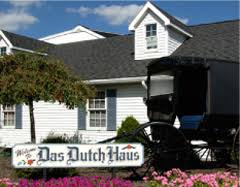
Das Dutch Haus Inn & Suites has been around awhile, but was recently renovated into a boutique hotel, which means they can charge more for the rooms.  The thing is, the rooms were really nice.  We had reserved a King Suite, which meant our room not only had a bed big enough for two people to swim around in without ever meeting, but also featured a kitchenette, a whirlpool, and a walled-off “room” containing a sofa and television.

As we checked in, we noticed a gaggle of teens in the nearby lobby dressed to the nines for their prom.  All the young women were holding bouquets in their hands as if they were heading to a wedding. “When did that become a thing?” we rhetorically asked the desk clerk.  She responded that she was just happy the bare midriff prom dress was no longer in fashion. We purchased a couple of drinks from Zeke’s Coffee in the lobby and retired to our room for a late afternoon siesta.

Being the rash and reckless couple that we are, when it came time for dinner, Michele and I risked life and bone-rattling limb with a drive back to Youngstown on cratered Market Street.  Then, to add to our derring-do street cred, we pulled up to the popular Roberto’s Italian Ristorante on West Federal Street on a Saturday night without a reservation.  That’s just the way we roll.

Fortunately, co-owner Roberto Faraglia didn’t bat an eye at our audacious behavior and found us an available table in the basement.  That might sound akin to seating us at the best spot…next to the Men’s Room, but the lower level was actually a cozy place. An exposed stone wall, warm red carpeting, wood accents, and a fireplace at one end, made it feel like we were dining in a Tuscan cottage.

Our waiter, who resembled actor Chris Pratt, brought us glasses of wine and fresh bread with a delectable cheesy dipping oil.  I started with Roberto’s Roasted Shrimp Cocktail before moving on to the Homemade Lasagna. Michele’s entrée was the house favorite fiocchi, “a beautiful blend of four cheeses and pear wrapped in pasta purses and served in a broth.”  Everything was delicious.

We had after dinner plans, but didn’t disclose them to our waiter, who left us to linger with a post-meal glow a little too long before bringing us the check.

By the time we returned to our car and drove the few blocks to the Youngstown State University campus, it was 8:05 pm.  A free program, “Oasis In Space,” was scheduled to begin at 8 pm at the Ward Beecher Planetarium. The website warned, “Once the show has started, latecomers will not be admitted.”  Since we’d yet to find a parking space, we accepted our status as latecomers and just drove on by. We did, however, chance upon our own celestial show. As we crossed the Mahoning River on our way out of downtown, I glanced to the west horizon and was momentarily blinded by a fireball sun as it peeked through a sliver of an opening in the clouds.

We returned to Das Dutch Haus Inn, picked up a couple more drinks from Zeke’s and a couple of complimentary cookies from the lobby, and retired to our room.  I’d like to say it was a peaceful evening, but if I was to critique the inn for anything, it would be for the thinly insulated space between our ceiling and the floor above us.  For about an hour after 10 pm, it sounded as though King Kong and Jabba the Hutt were upstairs vying for the title, “Heaviest Pacer of the Universe.” I never knew a person could walk with such heft.  The walking stopped by midnight, but erupted again the next morning between 6-7 am.

Fortunately, the beds were super comfortable, providing optimal rest.  We arose around 9 am and descended to the inn’s basement for our complimentary hot breakfast of scrambled eggs and sausage links, donuts and coffee.  Many of the other tables were occupied by older couples who all seemed to know each other. We had noticed quite a few vintage automobiles in the parking lot, so they may have been in town for a car show.

After checking out, we returned to State Route 7, but only followed it as far as U.S. Route 224, where we turned east.  The scenery was once again an unbroken stream of stores as we motored through the communities of Boardman and Poland. At the latter, we turned north onto Poland Avenue which took us away from the commercial district and into a more residential area.  We turned right at Wetmore Avenue and followed it down a steep stretch to a stream, over a bridge, and into the parking lot for Yellow Creek Park.

We hoped to follow a mile-long trail along the creek to the remains of the Hopewell Furnace.  What remains in a thick portion of forest near the dam to Lake Hamilton is the cut blocks of stone that once made up the first blast furnace in the state and one of the first west of the Allegheny Mountains.  You may have heard about it if you paid special attention to Bruce Springsteen’s song, “Youngstown.”

Here in northeast Ohio/ Back in eighteen-o-three/ James and Danny Heaton/ Found the ore that was linin’ Yellow Creek/ They built a blast furnace/ Here along the shore/ And they made the cannon balls/ That helped the Union win the war  (listen here)

I hate to be the party pooping fact police, but I’d be remiss if I didn’t point out that the Boss took a little literary license.  While the Heaton furnace did mark the beginning of the iron and steel industry in the Mahoning Valley, it only operated until 1808, long before the American Civil War.  Even had Springsteen found a good rhyming line referencing the War of 1812, it would have been a stretch. Whether it strictly aligns with the truth or not, I suppose it’s still pretty cool to have a Rock & Roll Hall of Famer write a song about your city.

We followed a primitive trail that led away from the parking lot, noticing early sprouts of skunk cabbage and white trillium, Ohio’s wildflower.  The park literature cautioned that the Hopewell Furnace was accessible by trail only when the Yellow Creek water levels were low. I didn’t know how serious to take the warning until we came to the first of three creek crossings.  The water was running fast and was indeed too high for a non-aquatic hike. As we scanned the area for any easy fording, I looked up and was surprised to see a deer on the opposite bank staring at us. Before I could ask its advice, it turned, gave us a few flicks of its white tail, and ambled off into the brush.  Defeated, we returned to our car.

We ascended back up Wetmore Avenue to Poland Avenue and north to State Street into an industrial tract where the road ran parallel with railroad tracks.  Turning left onto Indianola Avenue, we traveled west a few miles to Mill Creek MetroParks, a series of connected green spaces that encompasses over 4,400 acres.  It’s a gem of a park with myriad activities and attractions to offer, but we zeroed in on Lanterman’s Mill and Covered Bridge.

In 1846, German Lanterman and Samuel Kimberly constructed a gristmill into the natural rock of Mill Creek Gorge, just south of present day Canfield Road.  It was restored in the early 1980s and still operates today, grinding corn and wheat that can be purchased inside the gift shop run by MetroParks. With a picturesque waterfall next to the mill, this point in the park is a very popular spot.

We toured the mill and got an up-close look at the functioning waterwheel.  Just a short hop from the mill is a recently constructed covered bridge. During our visit, a young couple was making use of the scenic nature of the bridge by posing for pictures with a professional photographer.

We hiked north away from the mill along the East Gorge Trail.  It follows a series of boardwalk steps that hug the large rock outcroppings of the ravine, dipping to the level of the creek before ascending to a road.  We followed the latter to an interesting silver suspension bridge topped with two spires at each end. As I’ve now come to accept at such structures, there was a young couple getting their picture taken.  We walked across the span and poked around some bluebells coloring the roadside before turning back.

The return journey revealed cardinals and a tufted titmouse in the trees as well as swallows darting about the creek.  Just as we were to leave the low level of the gorge, Michele spotted a blue heron standing very still in a quiet pool of the creek.  We stood still and watched it. It didn’t move. We waited. It waited. We whispered to each other. It maintained its statuesque pose.  We waited longer. Then…ZAP!...its beak darted into the water and came up with a fish! It wiggled for just a brief moment in the heron’s bill before disappearing down its throat.  The bird’s patience, as well as our own, paid off!

After a bit of outdoor adventure, we headed back indoors for a bout of culture.  Back in downtown Youngstown, on the campus of Youngstown State University, is the Butler Institute of American Art.  Founded in 1919, the museum is dedicated to preserving and exhibiting art in all media created by citizens of the United States.  Everyone finds their own favorites in an art museum, but some of my own personal highlights included Winslow Homer’s Snap the Whip, Norman Rockwell’s Lincoln the Railsplitter, and The Oregon Trail by Albert Beirstadt.  If you should visit the Butler yourself, I would especially recommend finding Marc Sijan’s Seated Security Guard #2 and being prepared to be fooled and amazed.  We didn’t quite make it around to all the exhibits.  After a while, museum fatigue set in, so we left some art to be discovered another day.

Exiting the city along Mahoning Avenue, we crossed the Mahoning River, and then turned left onto McKinley Avenue where we found Fellows Riverside Gardens.  It sits near the confluence of Mill Creek and the Mahoning River and is the northern tip of the Mill Creek MetroPark. The impetus for choosing Mahoning County for this particular weekend was the promise of blooming tulips.  Each year around this time, over 40,000 tulip, crocus, and narcissus bulbs begin carpeting the grounds with colors. We may have been just a week or so early to enjoy the full effect, but there were enough blooming tulips to make it worth the trip.  The afternoon air was still a bit nippy, maybe too much for a prolonged stroll, but there were quite a few other visitors willing to risk a shiver or two. The well-kept twelve acres of garden are said to attract over 400,000 visitors each year.

After an abbreviated stroll, we continued west on Mahoning Avenue to State Route 46 and then south for five miles to the village of Canfield.  It seemed as though everywhere we looked, there were large metal plaques informing visitors of something important that had occurred on that spot.  With a population of about 7,000, Canfield must have more historical markers per capita than anywhere else around. It helps that Canfield was the original county seat of Mahoning County.  During a final flurry of county creation in the state, Mahoning came into existence in 1846 by combining spare townships from northern Trumbull County and southern Columbiana County.

Our purpose for stopping in Canfield was to see the original County Courthouse, a Classical Revival style building erected in 1848, soon after the centrally-located town was chosen to be the county’s seat of government.  It held that status for thirty years, until Youngstown wrestled it away in a challenge that had to be decided by the United States Supreme Court. Afterwards, without any government business to conduct, the former courthouse functioned for four decades as a school before passing into private hands and continuing life in various commercial pursuits.  The exterior was restored more than a century after its initial construction so that county trippers like us could continue to appreciate its form and history.

With our county itinerary complete, we turned west onto U.S. Route 224 and followed a direct route about twelve miles to the county line.  The scenery wasn’t especially interesting except for a herd of long horn cattle we passed in a field. Our final action in Mahoning County was to cross over the Berlin Reservoir, which straddles Mahoning and Portage Counties and has the distinction of being Ohio’s fifth largest inland lake.  With the sun shining brightly above us, I concluded it was a better day for sightseeing than for fishing.


Time spent in the county: 31 hours, 7 minutes

Miles driven in the county: 128 miles