Why JAWS Keeps Getting Better With Age by Johnny DiLoretto

Everytime I see Jaws it gets better.

I don’t swim in the ocean because of Steven Spielberg’s movie. Yes, I’m missing out on the sheer joy of frolicking in the surf. And, yet, I take comfort in the fact I’ll never have my torso severed in two by a fish.

I love this movie. Most people consider it a horror movie, but really, it’s an adventure movie; albeit, one punctuated by a few excruciating moments of horror. Jaws is a miracle of editing, narrative pacing, and some of the finest character acting of the 70s. Roy Scheider as Chief Brody is absolutely perfect. His performance is deftly, profoundly complemented by Richard Dreyfuss as Hooper, the marine biologist, and Robert Shaw as the salt-weathered Quint, the hard-drinkin' shark fisherman. And those are just the three leads. This movie is alive with the lived-in faces of the extras and smaller roles. Amity feels like a real place, like you could step through the screen and into the street. 

Then, of course, there's the shark. In an era, when CGI effects are so egregiously overwrought, the actual physical animatronic shark, though clunky, has real physical heft and presence. It may not be a real shark, it may even look fake, but a dude is eaten by it and he’s not just thrashing around in front of a green screen. 


jaws1.jpeg

So, recently a friend told me that he’d read Peter Benchley’s novel and he boldly asserted that the book was better than the movie. Thinking he might be a jackass, I bought the book and read it. Turns out my friend is a jackass. The book is fun but what should have been a taut 200-page thrill ride, is a belabored, enough-already, 300-plus page diversion with aspirations to seriousness. Spielberg adapted it into an unrivaled masterpiece. 

Here are some of the changes, tweaks, and massages Spielberg made to make his movie sing:

For starters, in the book, Brody is from Amity. He grew up on the island, so there’s nothing unfamiliar about it. This is stupid. Spielberg makes Brody a NYC transplant who’s terrified of the water but trying to adapt to small town coastal life when the shark turns up on his beaches. That is brilliant. Brody is off balance, trying to find his footing from the start.

One thing movies can do that books can’t is show, and allow the audience to hear, the real-life way human beings talk over one another. You can't write words over top of words. But you can hear actors literally speak their lines over the lines of other actors. Benchley drones on for pages about the town. Spielberg in the couple of tight scenes wherein the town council members and chamber officials chatter and jockey for position, brings Amity to vibrant life. 

In the novel, Brody’s wife Ellen is a thinly drawn, vaguely dissatisfied woman who sleeps with Hooper. This is just silly filler designed to make the book seem “deeper.” It doesn’t help that the Hooper character is also flatly uninspired. Spielberg makes her a faithful wife and a concerned mother, and he gives her that great moment when Brody, after reading up on shark attacks, frantically demands his kid get out of the docked sailboat he’s sitting in. Ellen thinks he’s overreacting, until she glances at a page in one of the books and sees an illustration of a shark eating through the hull of a boat. “Michael,” she screams, “you heard your father – get out of that boat right now!”

This is the kind of smartly observed family dynamic Benchely can’t touch.

Back to the marine biologist Hooper. He’s a yawn in Benchley’s version. In the movie, we get a smart, tenacious Richard Dreyfuss who bonds with the harried police chief despite their class differences.  The two become friends, bonding over the challenge of cutting through Amity’s small town culture to solve their shark problem. From the minute Hooper surveys the damage of the first victim, and chides the selectmen that “this was no boating accident!” Brody’s on his side and so are we.

That scene doesn’t even exist in the book, by the way.

jaws3hooper.jpg

It’s no accident that Brody and Hooper swim off together at the end like Rick and Renault walking off into the night at the end of Casablanca. That classic friendship is deliberately echoed here.

Spielberg makes a number of other brilliant changes to Benchley’s book too. Most notably with Quint. Benchely’s Quint is Ahab redux. All seafarin’ growl and piratey bluster. He introduces us to the character in a 5-page phone conversation. Spielberg gives us the nails-on-a-chalkboard entrance and the line “for that, I’ll give you the head, the tail, the whole damn thing.” Spielberg all the way on that one.

The director also gives us the inestimably great Robert Shaw, who’s not the one-dimensional shark-hating psychopath of the book. By giving his Quint the monologue about surviving the sinking of the U.S.S. Indianapolis and the blue shark feeding frenzy that consumed hundreds of men, Spielberg humanizes Quint, gives him a context for his shark obsession, and tragically foreshadows his spectacular demise.

In the book, Quint drowns like Melville’s Ahab. Dumb. In the film, he’s devoured in gut-wrenching high style.

Quint.jpg

I could go on. But let me end with this: in the book, Brody’s family is relegated to a few tossed off lines just to let us know he has one, I suppose. In the movie, he’s a father, his children swim and boat in these waters, and you can feel him weighing his every decision – how his every move might reverberate through the town or put his family in peril.

One of my favorite scenes in, not just Jaws, but in all of American cinema is the one following Brody’s comeuppance after a young boy is killed by the shark. (The child’s mother learns Brody knew about the first victim and that he failed to close the beaches. She publicly humiliates him with a smack to the face and the accusation that he was responsible for her son’s death.)

After this Spielberg cuts to the Brody family dinner table. Everyone has eaten; their places have been cleared. Ellen is washing dishes while a dejected Brody broods in his chair. We know the death of the boy wasn’t his fault, but, being a decent human being, he can’t help but consider his culpability.

He sighs and buries his face in his hands. When he peeks out from behind his fingers, he notices his youngest son, unaware of the true heft of his father’s burden, playfully imitating his every move. Brody plays along for a moment before he leans toward the boy and says “Give us a kiss.” “Why?” the kid asks. “Because I need it,” Brody replies, with the genuinely deflated air of a man beaten by a bad day at work and of a father seeking the affirmation of his child's love -- the child he is blessed to still have sitting across from him beautifully alive. 

I admit I cry every time I see this scene; and not because it’s some big, emotional moment. It’s just a small, sincerely realized moment of humanity. It’s the smallness of it that gets me – to see this truth played out: that sometimes, yes, indeed, a kiss from your child can cure many ills.

But it’s also the mark of a director in supreme command of his craft, taking some thrilling, pulpy material and transforming it into something human and unforgettable.

Johnny DiLoretto is a man of many talents. You can learn more about him and other Pencilstorm contributors by clicking here.

brodyhooper.jpg

Why "The Lone Ranger" is WAY Better Than "Man Of Steel" by Ricki C.

Okay, forget all those negative reviews of "The Lone Ranger" you've been reading everywhere, I'm gonna explain to you why Johnny Depp, Armie Hammer & company are far and away better than the Superman pic.  (OR any other summer movie so far this season.) 

Prologue: let me warn you, this blog is going to be all over the place, even more all over the place than my usual screeds.  We're gonna jump from topic to topic and story to story with very little regard for linear sense.  Any of you have ever tried to listen to me tell a story will understand.  (Example; I'll start to tell you about Watershed at the Arts Festival a coupla weeks ago and inexplicably wind up at babbling about Jimi Hendrix at Vet's Memorial in 1968.) 

First off, "The Lone Ranger" is great because it's the most anarchistic, anti-capitalistic, white-men-as-purveyors-of-genocide movie that will EVER have the name Disney  attached to it.  It's also either the most heartrending blockbuster summer movie action-adventure picture ever or the most exciting heartrending movie ever filmed.   I'm quite serious.  I have seen a LOT of movies in my 61 years on the planet and I'm not sure I've ever seen a movie this funny, this action-packed and simultaneously this sad ever.  (I was THIS CLOSE to tears twice, and I'm a big, tough guy.)  (HA!)   

Come to think of it, that's probably what's bringing about all the bad reviews.  I'm not sure anybody knows what to make of this movie: Is it a summer movie popcorn flick, is it a treatise on corporate greed, is it a scathing indictment of the treatment of American Indians that quite literally caused them to lose their birthright?  What IS this movie? 

This movie is Johnny Depp bringing his intellect, social conscience and star power to the summer movie genre and NAILING it.  It's so much better than its summer blockbuster competition it's almost not fair to compare. 

I saw "Man Of Steel" within a week of "The Lone Ranger" and they're just not in the same league.  All the early hype was that "Man Of Steel" would do for for the Superman mythos what the Christopher Nolan "Dark Knight trilogy" did for Batman.  That's just a laughable proposition.  First, without a Christian Bale, a Heath Ledger, or an Aaron Eckhart, you're just NOT gonna build a great comic-book movie.  (By the way; for those of you scoring at home, the three greatest comic-book movies of all time - "The Avengers," "The Dark Knight," and "Iron Man 2," the last largely on the strength of Mickey Rourke's villain portrayal.)  (Also by the way, "Man Of Steel" wasn't even as good as this summer's "Iron Man 3," and that movie wasn't all that great.)

The problem with "MOS" and "IM-3" was that there was no real HEART to them.  For all the talk of "Man Of Steel" portraying Superman as the last living member of his race, hopelessly alone on Earth, a man out of time & space, the film undercut its own point by introducing as villains six or seven OTHER surviving inhabitants of Krypton.  (Not to mention the INTERMINABLE living-hologram flashbacks of Russell Crowe as Jor-El, Superman's Kryptonian father.  If part of the pathos and premise of your film is that you've lost every living inhabitant of your planet, including your parents, you don't get a series of paternal do-overs.)

Plus the big-summer-movie-finale showdown in "Man Of Steel" was hopelessly derivative of the big-summer-movie-finale showdown in "The Avengers."  (And let's talk about summer-movie collateral damage: How many innocent bystanders would have been killed in the "Man Of Steel" skyscraper-toppling battle royal, with nary a nod or blink from the filmmakers?  The massacres that take place in "The Lone Ranger" actually REGISTER the loss of human life, you FEEL it in the pit of your stomach.  If you can watch this movie without being affected by them, I don't wanna hang out with you at the movies, or anywhere else.)  

And let's face facts; when director Gore Verbinski cues up and cranks up "The William Tell Overture" and Armie Hammer starts riding his stalwart stallion Silver ON TOP OF and THROUGH railroad cars, it's a pretty cool payoff to a great summer popcorn movie. 

In short, go see "The Lone Ranger" RIGHT NOW and wait 'til "Man Of Steel" shows up at Carriage Place where you can catch it for a buck or two.  - Ricki C. / July 7th, 2013 


(Next time on Ricki C. Takes All The Fun Out Of Comic Book Movies -  Stan Lee can take all of his millions from Marvel Studios and go to hell while Jack Kirby, who died in 1994 with maybe a few thousand bucks to his name, is barely remembered today, let alone credited for all of his comic book innovations.)  (For the comic book-uninitiated who know rock & roll - This situation would be roughly akin to The Beatles not being particularly popular while they were together, but thirty years after they break up their records go HUGE and make MILLIONS and Paul McCartney gets to keep all the money while John Lennon and his heirs get NOTHING.)


With Podcasts I Ride

I work for a courier service.  I drive almost 300 miles every workday.  I listen to music.  I listen to news radio during rush hour for the traffic reports.  I listen to nothing but the whistling wind.  I listen to podcasts.  These are the podcasts of my driving week.  Maybe you’d like to listen to them, too.

I listen to all of these via iTunes, but they are also streamed from their respective sites, which are linked within the images below. 

WTF with Marc Maron
Post Day: Monday and Thursday

Marc Maron is a comedian.  He is also an excellent conversationalist. After nearly 400 episodes, he has talked to most comics you can think of.  Old, new, some he has history with, some he’s only recently met.  Over the years, he has collected an oral history of what it’s like to be a working comedian. Whether you’ve heard of the person Marc is talking with or not, it will be worth your time.

As the podcast has grown in popularity (and possible exhaustion of the list of comics willing to talk), he has been speaking with more musicians, actors and directors.  All just as engaging as the conversations with his fellow comedians.  Marc has a natural fascination of how people get through life.

Every episode starts with an open monologue.  He uses this time to set some background to the particular interview and whatever else is on his mind.  He has an anxious and aggressive personality.  I've heard it’s not for everyone.  There is a fast forward button.  The talks are great.

Where to Start
Episode #398 - Danny Lobell.  Not only a great conversation with someone who had a comedians podcast before he did, but Marc greets new listeners in the opening and explains how to get the older episodes.  iTunes only has the last 50 episodes.  Here is a list of past guests. 

The Sign-Off
 “Boomer Lives!” One of Marc’s cats left and never came back.

The Firewall and Iceberg Podcast
Post Day: Monday or Tuesday. 

Dan Fienberg and Alan Sepinwall are the Siskel and Ebert of TV criticism. Every week they give you the straight poop on what's airing. They preview coming debuts and review finales.  Do you like Breaking Bad or Mad Men? You're in luck, because they talk about every episode as they air.  And, when the opportunity arises, they will analyze the business of television and the thinking behind programming.  

New content dries up during the summer, so they give themselves a summer project.  In the past, they have re-watched the entire series of Undeclared (episodes #19-26) and the first seasons of Twin Peaks (#77-79, #81-83, #85, #87) and Buffy: The Vampire Slayer (#131, #132-#137, #139-#142). 

This year, however, they are doing something different (and if you ask me, a lot of fun). They will be revisiting TV pilots. They will pick shows that can be found streaming online (Netflix, Hulu, TV.com, HBOGO, etc.) to make watching them a little easier.  The Sopranos kicked things off a few weeks ago (#185).  Taxi, Cheers (both #186) and Veronica Mars followed (#187).  Watch the pilots for The Dick Van Dyke Show and The Mary Tyler Moore Show for next week's conversation.

Where to Start
It's a current events show, so the most recent. Or #185, if you want to get in on the pilot fun.

For in-depth discussions of Breaking Bad and Mad Men episodes:
Breaking Bad, season 4: #85-91, #92-94, #96-98
Breaking Bad, season 5, part 1: #139-142, #144-147
Mad Men, season 4: #27-31, #33-35, #37, #39-42
Mad Men, season 5: #121-128, #130-132, #134
Mad Men, season 6: #176-181, #183-present 

And, if for some reason, you still need more discussion of the final season of Lost, Dan and Alan can get you through that, too (#2a-13, #15-18)

The Sign-Off
 “See you in the next life, Jack.” Midnight Run is Alan favorite movie.

Fight for Comics
Post Day: Wednesday

I started reading comics about a year and a half ago.  I looked for podcasts that reviewed the weekly outpouring of product every week and could clue me in on the vast history of the world I was getting to know. There aren’t many weekly comics podcasts, and this is one of the few (that I found) without Comic Book Guy snark. Oh, they can be sarcastic and frustrated about the comics industry at times, but it’s done without the eye-rolling and attitude of someone who read it all and can’t be impressed anymore. They love comics and it shows.

It took a few episodes to “get to know” these four friends, to fall in line with their patterns. But now, I look forward to their blathering. They are funny guys.  The fact that one of them sounds like somebody I know makes it that much more entertaining.

Where to Start
The last two weeks have been particularly good. Episode #195 is a regularly structured show, while this week's show is all Superman, featuring discussions about Superman Unchained (the new comic series), Superman Unbound (the latest animated movie) and Man of Steel (the latest live-action/computer-animated motion picture).

I Seem Fun: The Diary of Jen Kirkman
Post Day: Wednesday

Jen Kirkman is a comedian. Her drunk history made me laugh. Her albums made me laugh.  Now her podcast makes me laugh every week with her daisy chain stream of consciousness and storytelling. 

(If you're one of those folks who like to read words without pictures, her book, I Can Barely Take Care of Myself: Tales from a Happy Life Without Kids, is very good. )

Where to Start
It’s just a few weeks old; start from the beginning.  But, if you want to jump to some great ghost stories and my new favorite expression, dovetail water slide, go straight to episode six.

Broken Projector
Post Day: Friday

This podcast for FilmSchoolRejects.com is hosted by Scott Beggs and Geoff LaTulippe (screenwriter of Going the Distance). They interview filmmakers, largely independent creators and veterans of the industry, and engage in lively debate on movie-related topics, like which sequel is better: Temple of Doom or The Last Crusade (episode #1)? 

Where to Start
 
Hitchcock vs Spielberg (posted January 24, 2013)
What the Hell is Happening to VXF? (March 8, 2013)
Kickstarter for Millionaires (March 15, 2013) 
or the most recent one

And if you want more interviews of independent and veteran filmmakers, check out this podcast's predecessor, Reject Radio.

The Sign-Off
 "See you next Friday" is a riff on John Landis's recurring joke, See you next Wednesday. 

The Empire Podcast
Post Day: Friday

It's the movie magazine for your ears! Hosted by members of the Empire magazine staff, this is a weekly podcast full of answers to listener's questions, movie news, interviews and reviews of the latest releases. Once in a while there will be bonus episodes, which are either extended interviews or spoiler specials. They speak with British and Irish accents, making you a classier person for listening to them.

Where to Start 
The most recent regular podcast. As for the specials: 
The British Board of Film Classification Ratings Special (posted June 6, 2013) is a great look into the how films are rated in the UK with an interview of the BBFC’s executive director. 
The extended interview of Danny Boyle (March 27, 2013)
The extended interview of William Friedkin (June 29, 2012)

Doug Loves Movies
Post Day: Thursday or Friday (the regular show)

Doug Benson is a comedian. And he loves movies. Every week, he guides a group of guests (comedians, actors, directors) though a conversation that usually sticks to cinematic topics and a game or two. It's light-hearted and fun. If you take it too seriously, you are a shithead.

The Leonard Maltin Game is the star of the show for me.  It’s like Name That Tune but with actor’s names and movie titles instead of musical notes and song titles. Since it isn't always explained, here's how it's played:

Once a category is picked, Doug gives the panelists a few clues from Leonard’s review and the number of names listed in the cast. The panelists say how many names they need to guess the movie title. The number is whittled down until someone says “name that movie!” Then, the names are read from the bottom of the cast listing, up, so that the smallest roles are read first.

Panelists can also bid zero names or negative names. With zero names, only the movie title needs to be named.  With negative names,  the panelist must name the movie and the cast listing from the top, down, as Leonard has them listed.

If the panelist gets it right, he or she gets a point. If the panelist gets it wrong, the challenger gets the point. The first person to two points wins.

Where to Start
Scroll through past episode and find guests you've heard of then go from there. There are different lengths of episodes. Start with the ones in the 45-60 minute range.  Those are the regular, weekly shows. Last week's episode with Rory Scovel, Sarah Silverman and Zach Galifianakis is very good.  iTunes doesn’t have much before this year.  The rest can be purchased here. 

The Sign Off
The panelists play for members of the audience. The losing audience members get to have Doug call someone a shithead.

So concludes my podcast week.  

The Sex Pistols "The Filth & The Fury" Gateway Film Series by Ricki C.

Colin Gawel and Brian Phillips’ “Reelin’ & Rockin’ Film Series” at the Gateway Film Center on Wednesday (happy hour at 7 pm, film at 8 pm) is the Julien Temple-directed documentary on The Sex Pistols entitled “The Filth & The Fury.”  It’s a pretty cool rock & roll movie about a band I never really liked.

My problem with The Sex Pistols was that I always found them more of an Art Project than a Rock & Roll Band.  Anytime a rock combo gets assembled by a Manager, rather than built from the ground up by Rockers, I’m immediately suspect.  And The Manager in this case, Malcolm McLaren (who had already run The New York Dolls into the ground, dressing them up in red patent leather and having them appear in front of a Soviet flag backdrop; quoth David Johansen, “We proved that you can be transvestite homosexuals in America, but you CANNOT be Communists.”) was a lot more interested in Art than Rocking.

In their roughly 26-month existence The Sex Pistols pulled off a lot of publicity stunts – disrupting the headliner’s sets when they were still an opening band (including Joe Strummer’s pre-Clash pub-rock band The 101-er’s), trashing their first record company’s offices (EMI) and, pivotally, going on an afternoon British TV talk show and being goaded into swearing at host Bill Grundy, which led to tabloid headline “The Filth & The Fury,” giving this documentary its title.

I have always wondered how punk-rock would have developed if it had been allowed to evolve as a musical movement rather than as a Cultural Phenomenon, as it was forced to after The Sex Pistols’ media debacle.  Musically, I rate the Sex Pistols as having two GREAT songs – “Anarchy In The U.K.” and “God Save The Queen” – and two good songs – “Pretty Vacant” and “EMI.”   “Holiday In The Sun” is an okay song but, crucially, rips off its main riff from The Jam’s “In The City,” a song that’s superior and (obviously) much more original in every way.  That’s not a good count for a band with The Sex Pistols’ cachet, and their legend.  They only ever recorded one album – “Never Mind The Bollocks, Here’s The Sex Pistols” which would have translated in America as “Never mind the bullshit, here’s the Sex Pistols,” which, I admit, is kinda brilliant, but oh-so-Arty, and oh-so-British.  (And whose Bright Idea was it to fire the only member in the band capable of writing songs, bassist Glen Matlock, before the album was released and before the band ever “toured” America.)  (Don’t even get me started on that nightmare of naivete masquerading as a rock & roll tour, that’s a whole ‘nother blog in itself.  Great book about it called “12 Days On The Road – The Sex Pistols and America” by Noel Monk & Jimmy Gutterman, published in 1990.)      

I’ve always likened The Sex Pistols Story to that of Elvis Presley’s.  With the original four members, including Matlock on bass, The Sex Pistols were a MUSICAL unit, a rock & roll band that played gigs and made records that got LISTENED to, analogous to the lean, mean Elvis in 1956 with Scotty Moore, Bill Black and D.J. Fontana rocking behind him.  When Matlock was booted-out and non-musician Sid Vicious was drafted in (by all accounts at Johnny Rotten’s insistence) The Sex Pistols became a Pure Media Spectacle, a Malcolm McLaren Situationist Art Piece Fantasy, something to be LOOKED AT and WRITTEN ABOUT, a Rupert Murdoch Wet Dream, like Fat Elvis in 1976 Las Vegas, prancing around in sequin jumpsuits doing karate moves and slinging ballads like they were hash.

You should see this movie, you really should.  Julien Temple knows his subject matter and genuinely CARES about his characters (as he also amply demonstrated in the Joe Strummer documentary “The Future Is Unwritten”), but give me The Ramones or The Clash over The Sex Pistols on my stereo any day.  – Ricki C. / June 17th, 2013.


Why the World Needs Superman... by Johnny DiLoretto

Why the World Needs Superman...

I hate when people say they don’t like Superman. It’s like saying you don’t like Elvis. You might as well say you don’t like the first, best idea of something. Every rock and roller who came after Elvis has a part of Elvis in them – they couldn’t exist without Elvis. There are no Beatles without Elvis, no Springsteen, no nobody. Likewise, there are no other superheroes without Superman.

Superman, where superheroes are concerned, was the first best idea. Two guys from Cleveland said, hey, what if there was a dude who could do almost anything? They created Superman. The very next best superhero idea was Batman, who is the exact opposite in that he doesn’t have any powers at all. Every superhero creation thereafter was, is a variation of Superman or Batman.

superman_comic_rect.jpg

But what’s really galling are the people who don’t like Superman because he’s not… dark; because he’s earnest, honest, and pure.

This is the why of Superman.

Superheroes are spurred to action, driven, or compelled by some motivating event or force. Batman is motivated by the murder of his parents and Spiderman is motivated by the murder of his uncle, but Superman – he’s merely an orphan from another planet. Here on Earth, he just happens to be extraordinary. He was raised and loved by two adoptive parents. There’s no vengeance lurking in his character, no deep seated need to set things right.

So, why does Superman do good, why does he save people? You ready for this one? Because he can. He could rule over the Earth, make little puny, chump-ass, Superman-butt wiping slaves out of all of us, but he doesn’t. He’s motivated only by benevolence.  He doesn’t have to lift a superfinger, a finger by the way that could effortlessly flick our heads off, but he does.

And what makes him all the more extraordinary, is that he does this in spite of human beings being total assholes.

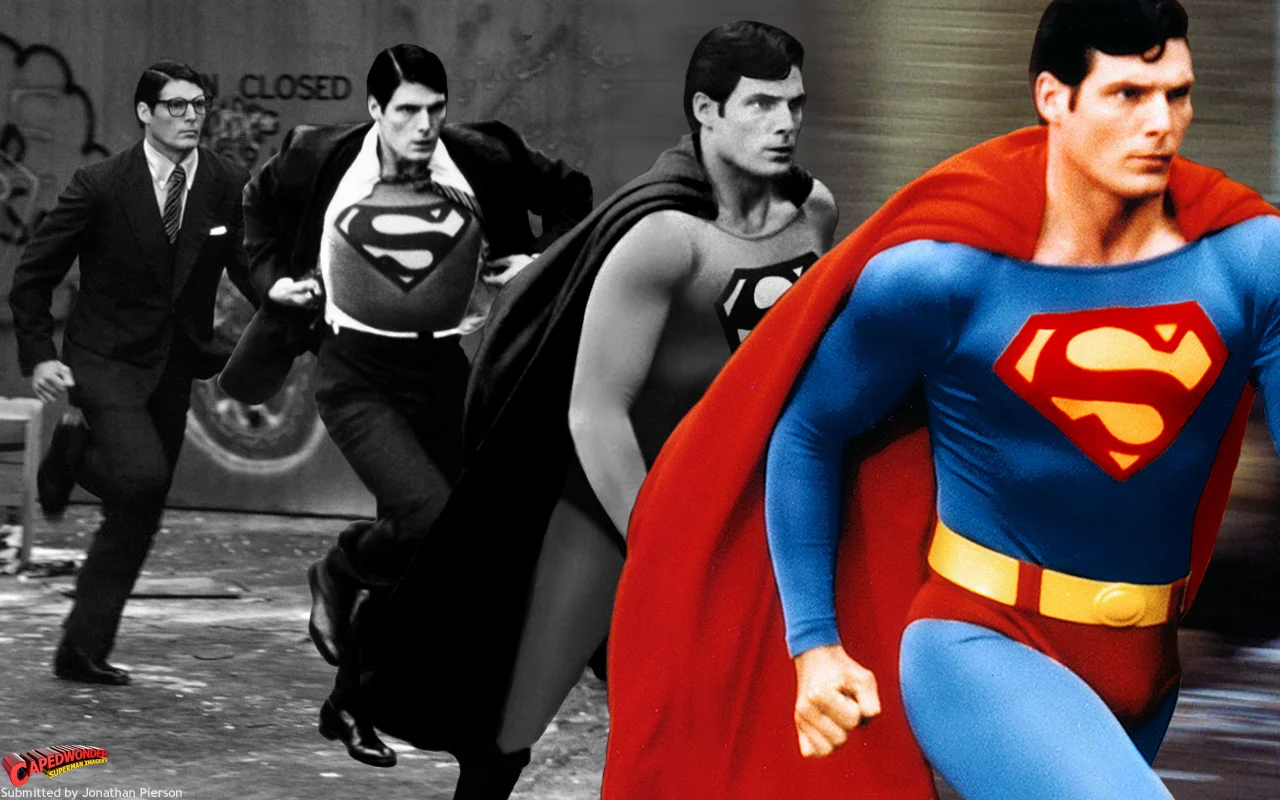
When I was a kid there were two moments in the first Christopher Reeve movies that are seared into my brain that I believe formed, partly, who I am today - or, at least, who I'd like to be.

supermantribute.jpg

The first comes in the great scene in which Margot Kidder’s Lois Lane interviews Superman on her balcony. The no-nonsense reporter asks Superman why he’s here, meaning on Earth, and he walks right into it: “to fight for truth, justice, and the American way,” he says. She rudely snickers at this seemingly naive answer. Superman turns suddenly very stern, locks eyes with her, and replies, “Lois, I never lie.”

Boom! Shut your cig hole Lois!

I’ve never forgotten that. And it still holds true today – that the minute you show people some raw earnestness they’ll try to slice you open.

The second moment is in Superman II during his epic battle against General Zod and Zod’s two other fellow Kryptonians, the three of whom all have the same super powers as Superman. It's three against one in the heart of Metropolis (a thinly disguised NYC) but it’s pretty much a stalemate until Zod stumbles upon Superman’s Achilles’ heel, and no, it's not Kryptonite. “I’ve discovered his weakness,” Zod informs his crew. “He actually cares for these… people.” 

zod3.jpg

Wow. What a punch to the gut. You can hurt him by hurting people?! Heavy. Again, just because he cares. And, then, in a stunningly dark assessment of human nature, the citizens of Metropolis turn against Superman, calling him a coward when he flees Metropolis to draw Zod away from them. He cares even when he shouldn't.

The Clark Kent / Superman Alter Ego Conundrum

The other thing that gets under my skin is when people say “Who wouldn’t be able to tell that Superman is Clark Kent? He’s only wearing glasses! Blah blah blah, I’m typical blah blah, I don’t think about anything interesting and I have no insight blah blah, I’m a dunce. Blah blah.”

georgeclark.jpg

Clark’s “disguise” really shouldn’t be an issue. It’s not that people can’t  see that Clark is Superman; it’s that they don’t want to see it.  His humility blinds them from it. People don’t want to see greatness in the quiet, unassuming guy sitting next to them at work. In fact, they downright refuse to see it.

clark.png

The very fact that people point to the so-called “lameness” of Clark’s disguise only points up their own lameness.

In Quentin Tarantino’s Kill Bill Vol 2, David Carradine has a great monologue about Superman in which he, and I’m paraphrasing, observes that “Superman’s costume isn’t a costume. Those are his clothes. Clark Kent is his costume. Clark Kent is how Superman sees us.”

I think that’s great, but not entirely accurate. Clark Kent is Superman’s way of showing us who we should be: honest, ethical, good, humble.

That we can’t see that simple truth is our problem. Each of us needs Superman to remind us to be our best possible self, to be good, to do good without the promise of reward, simply for the sake of good, even when it seems like other people don't deserve it. 

supermansun.jpeg

You can learn more about Johnny DiLoretto by visiting our contributors page here.

Calling Bulls**t on Iron Man 3 by Johnny DiLoretto

First let me say that Iron Man 3 is a lot of fun. Robert Downey, Jr. maintains a headlock on Tony Stark – he’s incorrigibly charming and still giving his all to the role, committing to the serious stuff just as wholeheartedly as he dives into the smartass, billionaire playboy stuff, at which he excels.

But RDJ gets dealt a shitty hand here. I’d like to think he’s smart enough to catch the BS flaw in this movie but maybe not.

There are two things this movie gets right: Downey, Jr., who, I’ve mentioned, proves he is the undisputed leader of the Marvel superhero pack; and the marketing. They sold this movie like it was going to be the Iron Man version of the Dark Knight with Oscar winner Ben Kingsley as Iron Man’s comic book arch nemesis, The Mandarin.

The trailer campaigns made it look like Iron Man 3 was going to be a long, dark pull on a crisp, cold, light beer. I don’t even know what that means, but it sounds good.

It looked like they were taking the character to a grim place where he needed to reassess who he is as a man and a hero and then exact butt-kicking, chest-blasting revenge on a ruthless terrorist. Turns out, it’s not that at all. The movie surprisingly pushes hard on the comedy  but the fact that – BIG OL’ SPOILER – Kingsley’s Mandarin turns out not to be the magic ring-wielding fiend of the comics, but a drunken, drug-addled simpleton actor playing the role of his life is a lame smack to the face.

This might have worked at an earlier stage of the Iron Man evolution, back before Thor and Loki and the alien menace of The Avengers, back before Marvel thought mainstream audiences wouldn’t buy the more ridiculous, otherworldly aspects of the comic book universe.  But  now that’s all changed since Iron Man teamed up with the Hulk and Thor in The Avengers and fought Loki and an army of speeder-bike riding extraterrestrials.

It’s safe to say, I think audiences might have bought the magic ring-wearing version of the Mandarin.


mandarin.jpg

Yes, Ben Kingsley is hilarious. Yes, it’s a surprise twist. But it’s jackass stupid. And it’s a nutless move.

But that’s not my biggest problem with the movie.

There’s a scene where nearly a dozen staffers get sucked out of a gaping hole torn in the fuselage of Air Force One and Iron Man flies out to save them, taking them by the hand one by one and forming a sky diving chain. With nearly a dozen people in tow,  he gently lowers into the bay below. It’s a stunning set piece – thrilling, inventive, and – heroic. Until, that is, the filmmakers reveal that Tony Stark is safely in the plane above remotely operating his suit of armor.

iron-man-3-plane.jpg

From the start of Downey’s turn as Stark, his journey has been one of a narcissistic hedonist who has found a path, through his technology, to a meaningful life. This all culminates at the end of The Avengers when he takes a nuclear missile up through a worm hole to save New York City.  As far as Stark knows, this is suicide. He is willing to sacrifice his life to save the lives of others. Once in space, he passes out and falls back through the worm hole before it closes up.

In Iron Man 3, Tony is haunted by his Avengers battle, you know, having faced down Asgardian evil and everything.

But this remote-controlled saving of the Air Force One passengers is a sign of sloppy writing and betrays the character’s arc. Maybe the old Tony Stark would have remote controlled his suit when human lives were at stake, but certainly not the post-Avengers Stark who has finally become a superhero by putting his life on the line for a greater cause.

Iron-Man-3-snow.jpg

In short, this is bullshit. This is how the glorification of video games is sneaking into our concept of heroism. So, now, people who fly drones are going to be considered as heroic as the soldiers on the ground?

Maybe I’m old fashioned, but I don’t want my superheroes to be superheroes just because they’re awesome at video games.

Johnny DiLoretto is a man of many talents. Click here to learn more on our contributor page.