Ricki & Colin's Strange Tales from the Cheap Trick Merch Table

This piece originally ran back in October of 2014, and Pencilstorm management is reprinting it now to encourage all of our readers to travel to the Ohio State Fair this Saturday, August 4th, to see the mighty Cheap Trick open for Styx.  (And let's face facts, it's gonna be an early night for ya, NOBODY in their right frickin' rock & roll minds would stay for Styx's entire set.)


The Watershed show opening for Cheap Trick at the House Of Blues in Myrtle Beach, S.C. last week went great, there'll be various blogs about different aspects of the trip over the next coupla weeks, here's the first installment. 

Tale # 1

Ricki C. - Classic merch moment: At a bar adjacent to the Myrtle Beach House of Blues where we're all kicking back after the show, Watershed drummer Dave Masica walks up to me with a "Why Isn't Cheap Trick in the Rock & Hall of Fame" t-shirt draped over his shoulder.  He pulls it off, hands it to me and says, "That guy over there wants to buy this, but I didn't know what to tell him, or how much they cost.  I told him to talk to you."

"Where did you get this?" I ask Dave.  (We had WICTITR&RHOF t's at the show, but weren't selling them.  We brought them for Colin to throw out into the audience as prizes during a quiz in the middle of set-ender "The Best Is Yet To Come.")  "I found it on the floor of the dressing room," Dave answers.  I shrug my shoulders, walk over to the guy and charge him 20 bucks for the shirt we normally sell for $15.  (I had come up $10 short on my merch totals that night according to Watershed road manager extraordinaire Michael "Biggie" McDermott, and figured this was my best shot at turning that deficit into a surplus.)  (By the way, I probably came up short because I left Colin in charge of the merch table while Biggie & I loaded out the gear after Watershed's set and Colin gave stuff away.)

Later that night, at yet another bar, Colin asks me if I picked up his WICTITR&RHOF shirt from the dressing room and I realize that I have unwittingly sold the sweaty, crummy t-shirt Colin had been wearing most of that day to some unsuspecting Rick Nielsen fan, who thought he was getting high-quality Cheap Trick merch.  Ooops.  Open message to random drunk Myrtle Beach guy: I'll make it up to you someday down the road.  

Tale # 2

Colin G. - So after we finished our set opening for Cheap Trick, I fight my way through the crowd to head out by the merch table because sometimes it helps to sell stuff if a band member is there bullshitting.  Ricki C. uses this opportunity to jam me there alone while making sure Biggie didn't need help backstage. I suspect he was going to the dressing room to make a peanut butter sandwich, but I can't prove it.

Anyway, it's kinda slow because people are waiting for Trick to come on, but one middle-aged woman is slowing picking up Watershed CDs and very thoroughly looking them over. Eventually she looks up at me and asks, "Which one has all the songs I know on it?"

"Come again?" I reply.

"Which one of these CDs has the songs I know on it?"

"Uh…."

This was a tricky question. See, with a band of our stature people usually know all of our songs or, as is much more likely, none of our songs. Thankfully, she could see I was struggling and added, "What's that one…..'I Want You to Want Me.'"

"Oh, that is a Cheap Trick song. That CD you are holding says Watershed on it. See right there? (I pointed to the big word Watershed on the front cover.) That means it's a Watershed CD, not a Cheap Trick CD."

"So you aren't in Cheap Trick?"

"No, I'm in Watershed" 

Never mind I had just come off stage and was still wearing my Watershed Hitless Wonder blue jumpsuit 

"Do you have any Cheap Trick CDs to sell?"

"No ma'am."

"Ok, goodbye."

Tale #3

Colin G. - So now I am standing at the merch table with Ricki,  Dave and Joe after Cheap Trick is done and it is mayhem. People are stacked three deep buying CDs, books, T-shirts, etc. and being good rock soldiers we are chatting with folks, offering to sign stuff and all that.

A woman leans forward and says loudly above the din of post show chaos, "Do you know who Richard Petty is?"

"Excuse me?" I said, not quite sure I was hearing her right.

"I said, DO YOU KNOW WHO RICHARD PETTY IS???" This time she said it quite loudly and seemed a little upset.

"Uh, like Richard Petty the race car driver?" was my unsure reply, spoken like a clueless Yankee.

"Yes, that one. You know, he told his sons that if they ever wanted to be famous they needed to write their names legibly so people can read them."

"You want me to sign my name more like Richard Petty's sons?"

"You already signed but I can barely read it. And you never even asked my name."

I mounted a weak defense: "Well, at least we are out here signing and being friendly. Doesn't that count for something? Besides, see that guy right there, he is an author and is really smart, I bet he will ask your name."

"Well, if you want to be famous and get on TV you better learn to write your autograph better, like Richard Petty's kids do."

Right then Joe O. leaned in and asked who he should sign this book to.

"Ha! Told you he would ask," I said, triumphant at the end.


Learn more about Ricki and Colin and the rest of the Pencilstorm contributors by clicking here.

Show Preview: The Stick Arounds at The Tree Bar in Columbus, August 4th - by Jeremy Porter

This Saturday, August 4th, Columbus is blessed with the presence of one of the better bands to come out of the Great Lakes State in some time – The Stick Arounds! These dudes are from Lansing – the state capital, home of their label and mine, GTG Records, and Elderly Instruments, one of the best guitar shops in the country. They've got that heart-on-your-sleeve, probably-should-have-quit-before-that-last-whiskey, keep-it-loose-&-loud sound that is best delivered in a flannel shirt and an upper-Midwestern accent.

mystery.jpg

The Sticks have been at it together since 2013, and individually for a good while before that.  Their debut LP "Mystery Garage" was recorded live over two nights at the, um… venue with the same name – a greasy but absolutely charming converted service station beneath an underpass on a dark Lansing street that has since closed, but was the home to many great shows during its existence. They've been tearing it up around Michigan and surrounding states since, honing their three-guitar, bass & drums set on whatever stage they can find.

Ways-To-Hang-On-Front-Cover-Only-600.jpg

They’ve got a new record in the can, "Ways to Hang On," scheduled for release on October 26th.  What "Mystery Garage" had in raw, live power jams, "Ways to Hang On" also has, but with the additional crème brulee of a solid studio album with great guitars, harmonies, songs, and a mix that wraps it all up in a nice sonic package. It's a great step forward for these guys, and I can't wait to hear these songs rip live.  Check out the first single and video for Get U Back:  


The Stick Arounds are heading out for a three-nighter this weekend and I suggest you get your behind out to The Tree Bar on Saturday night to see them for yourself. Pick up a copy of "Mystery Garage," buy Pops (singer/guitar) a shot, and discover your new favorite band.  

Saturday August 4th 8PM FREE!
The Tree Bar – 887 Chambers Rd – Columbus OH
Harvest Kings/The Stick Arounds/Push Me Pull You/Apple and The Moon  

(Also at The Melody Inn in Indianapolis on Thursday and Blind Bob's in Dayton on Friday!)

www.stickaroundsmusic.com


Jeremy Porter lives near Detroit and fronts the rock and roll band Jeremy Porter And The Tucos - www.thetucos.com

Follow them on Facebook to read his road blog about their adventures on the dive-bar circuit -
www.facebook.com/jeremyportermusic 


Twitter: @jeremyportermi | Instagram: @onetogive | www.rockandrollrestrooms.com


Summer Vacation with County Trippin' !

The Pencilstorm offices will be closed for a few days for a much-needed summer break. In the meantime we leave you with the complete County Trippin' series (so far) by Nick Taggart. We post lots of cool things at Pencilstorm, but County Trippin' might be at the top of the heap. Please share these stories with your traveling friends and maybe you will visit some of these spots yourself. Thanks for supporting Pencilstorm! - Colin 

Ohio County Trippin' Part Eight: Mahoning County - by Nick Taggart

Ohio County Trippin’ Part Eight: MAHONING COUNTY

By Nick Taggart - “Youngstown Tune-Up"  - 28-29 April 2018 (Click here for previous County T)


The fish were most likely biting as we entered the county on an overcast Saturday morning along Mahoning Avenue.  We crossed over the causeway of Lake Milton, a 1,685-acre reservoir, popular among anglers, as light drops of rain speckled the water’s surface.  The only thing we were angling for, though, was breakfast, so we continued our drive east. The points of interest that caught our attention included the Jackson-Milton Middle and High School complex, built nearly a decade ago, and its neighbor, the Tri-Lakes Library, both constructed with natural stone.  A nearby water tower displayed the school’s mascot and informed all visitors this was “Blue Jay Country.”

After ducking under the turnpike, we pulled in at The Korner restaurant, a popular, unassuming eatery that appears to attract hunters and other outdoorsy types, the kind of place where it’s necessary to post a sign, “No muddy boots.”  After settling into an available booth, I went looking for the restroom and had to wait my turn behind two polite camouflage-adorned men wearing black NFL linebacker-like mascara. Had we been in the wilds, I would have bumped right into them, so well costumed they were to blend into their surroundings.

After our prerequisite coffees, Michele ordered the Sampler, which included a hotcake, two eggs, a choice of meat, and toast.  I opted for the Italian Breakfast Bowl, a combination of any style eggs over a quarter pound hot sausage patty, home fries with peppers and onions, and topped with hot pepper marinara sauce.  The diner behind me was regaling his companion with hunting tales. “I shot it and it went in and rode the ribs before it penetrated,” he said. “I saw blood coming out the side.” This narrative might have fouled my breakfast experience, especially with all that red sauce, had it not been for the supreme quality of the food (and my hunger) because I didn’t have a problem finishing every last bite in my bowl.

After our meal, we drove north on Lipkey Road with the sprawling Meander Creek Reservoir on our right.  The vast preserve provides drinking water for the county, but is also a giant tease to anglers and hunters.  Its community purpose prevents trespassing, but I read that the reservoir is well-stocked with fish, and, as we drove along its perimeter, Michele spotted a deer and wild turkey leisurely and tauntingly foraging behind a fence.

We continued north to just shy of the county border before turning into the parking lot of the Basilica and National Shrine of Our Lady of Lebanon.  It is a replica of a shrine in Harissa, Lebanon. It’s difficult to miss because out front stands a 16-foot statue of the Virgin Mary atop a 55-foot round tower, resembling a sort of inland lighthouse.  Unfortunately, the winding steps leading to the figure were closed to foot traffic, so we were left looking up the lady’s rose granite garments from below.

imgres.jpg

We stepped inside the religious gift shop.  Being the heathen infidel that I am, I am always encouraged when I don’t spontaneously burst into flames when entering such establishments.  There was another couple perusing the merchandise and I overheard them say they were looking for a gift in honor of their nephew’s first communion.  Not knowing anything about the tyke, I’m still pretty sure he’d prefer an Xbox to any combination of religious tracts or rosaries that filled the shelves, but it wasn’t my decision to make.  I did spot, however, an appropriate gift if the youngster planned to make a career in real estate. Wee statues of St. Joseph were on sale and the packaging guaranteed quick property sales if the little guy were buried somewhere on the property.  “Faith can move mountains,” the box read, “and homes!”

Good natured ribbing of another’s beliefs comes with a price tag and our tab came to $19.18.  That was the total on our receipt for a box of assorted saint notecards and a 26 oz. container of “Blessed Salt.”  The latter may have looked like an ordinary package of Stonemill Iodized Salt, but the sticker on top confirmed it had been officially blessed, in this case upon inquiry, by Chorbishop Anthony Spinosa, the head honcho at the basilica.  Both items are intended as gifts, but I feel as though we should keep at least a pinch of the latter to use at our next dinner party. (“I detect tarragon and mustard and…is that blessed salt I taste?! Oh, you must give me the recipe!”)  A warning to consumers: excessive consumption of blessed salt in one’s diet can lead to high blessed blood pressure!

After a quick swing through the chapel, we got back in our car and returned to Mahoning Avenue for our eastward march toward the county seat.  Along the way, we passed through the city of Austintown and a corridor of commerce that includes an everlasting string of ubiquitous Auto Zones and Burger Kings and Chevrolet dealerships.  As we passed the cross street of Belle Vista Avenue, I could understand how the road got its name, for ahead of us was a clear view down to the Mahoning River Valley and the skyline of Youngstown.

We weren’t sure what to expect of the city.  Neither Michele nor I had ever been to this part of the state and no matter how many of my friends I surveyed, neither had any of them.  All I thought I knew was based on half-remembered rumors and innuendo. The area used to be run by the Mob, right? The collapse of the steel industry decimated the local economy, right?  Well, sort of yes to both of those questions. A quick check on Wikipedia filled in some of the blanks.

In the late 1950s and early 1960s, the city did witness its share of gangland killings including enough involving exploding automobiles that “Youngstown tune-up” became national slang for a car-bomb assassination.  As recent as 2000, an investigative journalism story in The New Republic reported Mob control of all levels of government.  Two years later, former United States Representative James Traficant was convicted of bribery, tax fraud, and racketeering.  His worst crime, however, may have been the scurry of squirrels he wore on his head that could easily be considered the worst rug in Congressional history.

The Mahoning River Valley had been a center of iron and steel production since at least the middle of the 19th Century, but when that industry took a nose dive at the end of the 1970s, four local mills closed and about 50,000 people lost their jobs.  The city’s population hovered around 167,000 for three decades, but by 2010 it had dropped to about 67,000.

With those facts and figures swirling through my head, I aimed to get a better perspective at the Youngstown Historical Center of Industry & Labor on West Wood Street.  Our Ohio History Connection membership allowed us free admission. (My favorite of all the admissions!) The permanent exhibit, “By the Sweat of Their Brow: Forging the Steel Valley,” does an excellent job telling the story of the steel industry.  A combination of interpretive panels, video, photographs, and archival items informs visitors about iron and steel production and the toll it takes on the workers responsible for keeping the mills running, many of them recent immigrants to the country.  Museum brochures suggest allowing at least an hour to tour the exhibits. Our own visit was double that time.

Back in our car, I pushed play on the CD player.  We’d been listening to Emmylou Harris’s “Wrecking Ball.”  Coincidentally, the first song to play after our labor lesson was “Blackhawk.”

Well, I work the double shift/ In a bookstore on St. Clair/ While he pushed the burning ingots/ In Dofasco stinking air…Hold on to your aching heart/ I’ll wipe the liquor from your lips/ A small town hero never dies/ He fades a bit and then he slips/ Down into the blast furnace/ In the heat of the open hearth/ And at the punch clock he remembers/ Blackhawk and the white winged dove

Dofasco is a steel company based in Hamilton, Ontario, but I’m sure the grueling and exhausting experience of a steel mill worker is common across international borders.

Before leaving town, we paused on Wick Avenue so I could snap a photograph of the Mahoning County Courthouse.  It’s just over a century old, having been completed in 1910, and displays the grand majesty of a public building constructed in the Second Renaissance Revival style, with six Ionic columns rising two stories in its central pavilion.  

We drove south out of the downtown, across the Mahoning River and along Market Street.  Despite the severe drop in population, I hadn’t noticed much in the way of urban blight in the limited tour of the city we’d so far taken.  There didn’t seem to be an excess of boarded up or abandoned buildings and no more check cashing establishments than I might find in Columbus.  If I was to judge Youngstown and Mahoning County on the state of the roads, though, they both might receive failing marks.

Market Street was so pitted and pockmarked that its 35 mile per hour speed limit seemed rather daring.  Even slaloming around the potholes, I couldn’t help but bounce down and up through a few I couldn’t avoid.  I think the lethal “Youngstown tune-up” has been replaced by the costly “Youngstown realignment.” It’s not as though Market Street is just a local thoroughfare that has been neglected by local government.  It’s also Ohio State Route 7 that runs top to bottom through the county and beyond.

We rattled our way along until we turned onto the much better paved South Avenue, which led us to the city of Columbiana.  The municipal district actually straddles two counties, but fortunately for us, our night’s accommodation was located on the Mahoning County side of the border.

imgres-1.jpg

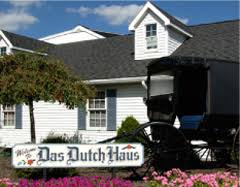
Das Dutch Haus Inn & Suites has been around awhile, but was recently renovated into a boutique hotel, which means they can charge more for the rooms.  The thing is, the rooms were really nice.  We had reserved a King Suite, which meant our room not only had a bed big enough for two people to swim around in without ever meeting, but also featured a kitchenette, a whirlpool, and a walled-off “room” containing a sofa and television.

As we checked in, we noticed a gaggle of teens in the nearby lobby dressed to the nines for their prom.  All the young women were holding bouquets in their hands as if they were heading to a wedding. “When did that become a thing?” we rhetorically asked the desk clerk.  She responded that she was just happy the bare midriff prom dress was no longer in fashion. We purchased a couple of drinks from Zeke’s Coffee in the lobby and retired to our room for a late afternoon siesta.

Being the rash and reckless couple that we are, when it came time for dinner, Michele and I risked life and bone-rattling limb with a drive back to Youngstown on cratered Market Street.  Then, to add to our derring-do street cred, we pulled up to the popular Roberto’s Italian Ristorante on West Federal Street on a Saturday night without a reservation.  That’s just the way we roll.

Fortunately, co-owner Roberto Faraglia didn’t bat an eye at our audacious behavior and found us an available table in the basement.  That might sound akin to seating us at the best spot…next to the Men’s Room, but the lower level was actually a cozy place. An exposed stone wall, warm red carpeting, wood accents, and a fireplace at one end, made it feel like we were dining in a Tuscan cottage.

Our waiter, who resembled actor Chris Pratt, brought us glasses of wine and fresh bread with a delectable cheesy dipping oil.  I started with Roberto’s Roasted Shrimp Cocktail before moving on to the Homemade Lasagna. Michele’s entrée was the house favorite fiocchi, “a beautiful blend of four cheeses and pear wrapped in pasta purses and served in a broth.”  Everything was delicious.

We had after dinner plans, but didn’t disclose them to our waiter, who left us to linger with a post-meal glow a little too long before bringing us the check.

By the time we returned to our car and drove the few blocks to the Youngstown State University campus, it was 8:05 pm.  A free program, “Oasis In Space,” was scheduled to begin at 8 pm at the Ward Beecher Planetarium. The website warned, “Once the show has started, latecomers will not be admitted.”  Since we’d yet to find a parking space, we accepted our status as latecomers and just drove on by. We did, however, chance upon our own celestial show. As we crossed the Mahoning River on our way out of downtown, I glanced to the west horizon and was momentarily blinded by a fireball sun as it peeked through a sliver of an opening in the clouds.

We returned to Das Dutch Haus Inn, picked up a couple more drinks from Zeke’s and a couple of complimentary cookies from the lobby, and retired to our room.  I’d like to say it was a peaceful evening, but if I was to critique the inn for anything, it would be for the thinly insulated space between our ceiling and the floor above us.  For about an hour after 10 pm, it sounded as though King Kong and Jabba the Hutt were upstairs vying for the title, “Heaviest Pacer of the Universe.” I never knew a person could walk with such heft.  The walking stopped by midnight, but erupted again the next morning between 6-7 am.

Fortunately, the beds were super comfortable, providing optimal rest.  We arose around 9 am and descended to the inn’s basement for our complimentary hot breakfast of scrambled eggs and sausage links, donuts and coffee.  Many of the other tables were occupied by older couples who all seemed to know each other. We had noticed quite a few vintage automobiles in the parking lot, so they may have been in town for a car show.

After checking out, we returned to State Route 7, but only followed it as far as U.S. Route 224, where we turned east.  The scenery was once again an unbroken stream of stores as we motored through the communities of Boardman and Poland. At the latter, we turned north onto Poland Avenue which took us away from the commercial district and into a more residential area.  We turned right at Wetmore Avenue and followed it down a steep stretch to a stream, over a bridge, and into the parking lot for Yellow Creek Park.

We hoped to follow a mile-long trail along the creek to the remains of the Hopewell Furnace.  What remains in a thick portion of forest near the dam to Lake Hamilton is the cut blocks of stone that once made up the first blast furnace in the state and one of the first west of the Allegheny Mountains.  You may have heard about it if you paid special attention to Bruce Springsteen’s song, “Youngstown.”

Here in northeast Ohio/ Back in eighteen-o-three/ James and Danny Heaton/ Found the ore that was linin’ Yellow Creek/ They built a blast furnace/ Here along the shore/ And they made the cannon balls/ That helped the Union win the war  (listen here)

I hate to be the party pooping fact police, but I’d be remiss if I didn’t point out that the Boss took a little literary license.  While the Heaton furnace did mark the beginning of the iron and steel industry in the Mahoning Valley, it only operated until 1808, long before the American Civil War.  Even had Springsteen found a good rhyming line referencing the War of 1812, it would have been a stretch. Whether it strictly aligns with the truth or not, I suppose it’s still pretty cool to have a Rock & Roll Hall of Famer write a song about your city.

We followed a primitive trail that led away from the parking lot, noticing early sprouts of skunk cabbage and white trillium, Ohio’s wildflower.  The park literature cautioned that the Hopewell Furnace was accessible by trail only when the Yellow Creek water levels were low. I didn’t know how serious to take the warning until we came to the first of three creek crossings.  The water was running fast and was indeed too high for a non-aquatic hike. As we scanned the area for any easy fording, I looked up and was surprised to see a deer on the opposite bank staring at us. Before I could ask its advice, it turned, gave us a few flicks of its white tail, and ambled off into the brush.  Defeated, we returned to our car.

We ascended back up Wetmore Avenue to Poland Avenue and north to State Street into an industrial tract where the road ran parallel with railroad tracks.  Turning left onto Indianola Avenue, we traveled west a few miles to Mill Creek MetroParks, a series of connected green spaces that encompasses over 4,400 acres.  It’s a gem of a park with myriad activities and attractions to offer, but we zeroed in on Lanterman’s Mill and Covered Bridge.

In 1846, German Lanterman and Samuel Kimberly constructed a gristmill into the natural rock of Mill Creek Gorge, just south of present day Canfield Road.  It was restored in the early 1980s and still operates today, grinding corn and wheat that can be purchased inside the gift shop run by MetroParks. With a picturesque waterfall next to the mill, this point in the park is a very popular spot.

We toured the mill and got an up-close look at the functioning waterwheel.  Just a short hop from the mill is a recently constructed covered bridge. During our visit, a young couple was making use of the scenic nature of the bridge by posing for pictures with a professional photographer.

We hiked north away from the mill along the East Gorge Trail.  It follows a series of boardwalk steps that hug the large rock outcroppings of the ravine, dipping to the level of the creek before ascending to a road.  We followed the latter to an interesting silver suspension bridge topped with two spires at each end. As I’ve now come to accept at such structures, there was a young couple getting their picture taken.  We walked across the span and poked around some bluebells coloring the roadside before turning back.

The return journey revealed cardinals and a tufted titmouse in the trees as well as swallows darting about the creek.  Just as we were to leave the low level of the gorge, Michele spotted a blue heron standing very still in a quiet pool of the creek.  We stood still and watched it. It didn’t move. We waited. It waited. We whispered to each other. It maintained its statuesque pose.  We waited longer. Then…ZAP!...its beak darted into the water and came up with a fish! It wiggled for just a brief moment in the heron’s bill before disappearing down its throat.  The bird’s patience, as well as our own, paid off!

After a bit of outdoor adventure, we headed back indoors for a bout of culture.  Back in downtown Youngstown, on the campus of Youngstown State University, is the Butler Institute of American Art.  Founded in 1919, the museum is dedicated to preserving and exhibiting art in all media created by citizens of the United States.  Everyone finds their own favorites in an art museum, but some of my own personal highlights included Winslow Homer’s Snap the Whip, Norman Rockwell’s Lincoln the Railsplitter, and The Oregon Trail by Albert Beirstadt.  If you should visit the Butler yourself, I would especially recommend finding Marc Sijan’s Seated Security Guard #2 and being prepared to be fooled and amazed.  We didn’t quite make it around to all the exhibits.  After a while, museum fatigue set in, so we left some art to be discovered another day.

Exiting the city along Mahoning Avenue, we crossed the Mahoning River, and then turned left onto McKinley Avenue where we found Fellows Riverside Gardens.  It sits near the confluence of Mill Creek and the Mahoning River and is the northern tip of the Mill Creek MetroPark. The impetus for choosing Mahoning County for this particular weekend was the promise of blooming tulips.  Each year around this time, over 40,000 tulip, crocus, and narcissus bulbs begin carpeting the grounds with colors. We may have been just a week or so early to enjoy the full effect, but there were enough blooming tulips to make it worth the trip.  The afternoon air was still a bit nippy, maybe too much for a prolonged stroll, but there were quite a few other visitors willing to risk a shiver or two. The well-kept twelve acres of garden are said to attract over 400,000 visitors each year.

After an abbreviated stroll, we continued west on Mahoning Avenue to State Route 46 and then south for five miles to the village of Canfield.  It seemed as though everywhere we looked, there were large metal plaques informing visitors of something important that had occurred on that spot.  With a population of about 7,000, Canfield must have more historical markers per capita than anywhere else around. It helps that Canfield was the original county seat of Mahoning County.  During a final flurry of county creation in the state, Mahoning came into existence in 1846 by combining spare townships from northern Trumbull County and southern Columbiana County.

Our purpose for stopping in Canfield was to see the original County Courthouse, a Classical Revival style building erected in 1848, soon after the centrally-located town was chosen to be the county’s seat of government.  It held that status for thirty years, until Youngstown wrestled it away in a challenge that had to be decided by the United States Supreme Court. Afterwards, without any government business to conduct, the former courthouse functioned for four decades as a school before passing into private hands and continuing life in various commercial pursuits.  The exterior was restored more than a century after its initial construction so that county trippers like us could continue to appreciate its form and history.

With our county itinerary complete, we turned west onto U.S. Route 224 and followed a direct route about twelve miles to the county line.  The scenery wasn’t especially interesting except for a herd of long horn cattle we passed in a field. Our final action in Mahoning County was to cross over the Berlin Reservoir, which straddles Mahoning and Portage Counties and has the distinction of being Ohio’s fifth largest inland lake.  With the sun shining brightly above us, I concluded it was a better day for sightseeing than for fishing.


Time spent in the county: 31 hours, 7 minutes

Miles driven in the county: 128 miles


Copy of Ohio County Trippin' Part Eight: Mahoning County - by Nick Taggart

Ohio County Trippin’ Part Eight: MAHONING COUNTY

By Nick Taggart - “Youngstown Tune-Up"  - 28-29 April 2018 (Click here for previous County T)


The fish were most likely biting as we entered the county on an overcast Saturday morning along Mahoning Avenue.  We crossed over the causeway of Lake Milton, a 1,685-acre reservoir, popular among anglers, as light drops of rain speckled the water’s surface.  The only thing we were angling for, though, was breakfast, so we continued our drive east. The points of interest that caught our attention included the Jackson-Milton Middle and High School complex, built nearly a decade ago, and its neighbor, the Tri-Lakes Library, both constructed with natural stone.  A nearby water tower displayed the school’s mascot and informed all visitors this was “Blue Jay Country.”

After ducking under the turnpike, we pulled in at The Korner restaurant, a popular, unassuming eatery that appears to attract hunters and other outdoorsy types, the kind of place where it’s necessary to post a sign, “No muddy boots.”  After settling into an available booth, I went looking for the restroom and had to wait my turn behind two polite camouflage-adorned men wearing black NFL linebacker-like mascara. Had we been in the wilds, I would have bumped right into them, so well costumed they were to blend into their surroundings.

After our prerequisite coffees, Michele ordered the Sampler, which included a hotcake, two eggs, a choice of meat, and toast.  I opted for the Italian Breakfast Bowl, a combination of any style eggs over a quarter pound hot sausage patty, home fries with peppers and onions, and topped with hot pepper marinara sauce.  The diner behind me was regaling his companion with hunting tales. “I shot it and it went in and rode the ribs before it penetrated,” he said. “I saw blood coming out the side.” This narrative might have fouled my breakfast experience, especially with all that red sauce, had it not been for the supreme quality of the food (and my hunger) because I didn’t have a problem finishing every last bite in my bowl.

After our meal, we drove north on Lipkey Road with the sprawling Meander Creek Reservoir on our right.  The vast preserve provides drinking water for the county, but is also a giant tease to anglers and hunters.  Its community purpose prevents trespassing, but I read that the reservoir is well-stocked with fish, and, as we drove along its perimeter, Michele spotted a deer and wild turkey leisurely and tauntingly foraging behind a fence.

We continued north to just shy of the county border before turning into the parking lot of the Basilica and National Shrine of Our Lady of Lebanon.  It is a replica of a shrine in Harissa, Lebanon. It’s difficult to miss because out front stands a 16-foot statue of the Virgin Mary atop a 55-foot round tower, resembling a sort of inland lighthouse.  Unfortunately, the winding steps leading to the figure were closed to foot traffic, so we were left looking up the lady’s rose granite garments from below.

imgres.jpg

We stepped inside the religious gift shop.  Being the heathen infidel that I am, I am always encouraged when I don’t spontaneously burst into flames when entering such establishments.  There was another couple perusing the merchandise and I overheard them say they were looking for a gift in honor of their nephew’s first communion.  Not knowing anything about the tyke, I’m still pretty sure he’d prefer an Xbox to any combination of religious tracts or rosaries that filled the shelves, but it wasn’t my decision to make.  I did spot, however, an appropriate gift if the youngster planned to make a career in real estate. Wee statues of St. Joseph were on sale and the packaging guaranteed quick property sales if the little guy were buried somewhere on the property.  “Faith can move mountains,” the box read, “and homes!”

Good natured ribbing of another’s beliefs comes with a price tag and our tab came to $19.18.  That was the total on our receipt for a box of assorted saint notecards and a 26 oz. container of “Blessed Salt.”  The latter may have looked like an ordinary package of Stonemill Iodized Salt, but the sticker on top confirmed it had been officially blessed, in this case upon inquiry, by Chorbishop Anthony Spinosa, the head honcho at the basilica.  Both items are intended as gifts, but I feel as though we should keep at least a pinch of the latter to use at our next dinner party. (“I detect tarragon and mustard and…is that blessed salt I taste?! Oh, you must give me the recipe!”)  A warning to consumers: excessive consumption of blessed salt in one’s diet can lead to high blessed blood pressure!

After a quick swing through the chapel, we got back in our car and returned to Mahoning Avenue for our eastward march toward the county seat.  Along the way, we passed through the city of Austintown and a corridor of commerce that includes an everlasting string of ubiquitous Auto Zones and Burger Kings and Chevrolet dealerships.  As we passed the cross street of Belle Vista Avenue, I could understand how the road got its name, for ahead of us was a clear view down to the Mahoning River Valley and the skyline of Youngstown.

We weren’t sure what to expect of the city.  Neither Michele nor I had ever been to this part of the state and no matter how many of my friends I surveyed, neither had any of them.  All I thought I knew was based on half-remembered rumors and innuendo. The area used to be run by the Mob, right? The collapse of the steel industry decimated the local economy, right?  Well, sort of yes to both of those questions. A quick check on Wikipedia filled in some of the blanks.

In the late 1950s and early 1960s, the city did witness its share of gangland killings including enough involving exploding automobiles that “Youngstown tune-up” became national slang for a car-bomb assassination.  As recent as 2000, an investigative journalism story in The New Republic reported Mob control of all levels of government.  Two years later, former United States Representative James Traficant was convicted of bribery, tax fraud, and racketeering.  His worst crime, however, may have been the scurry of squirrels he wore on his head that could easily be considered the worst rug in Congressional history.

The Mahoning River Valley had been a center of iron and steel production since at least the middle of the 19th Century, but when that industry took a nose dive at the end of the 1970s, four local mills closed and about 50,000 people lost their jobs.  The city’s population hovered around 167,000 for three decades, but by 2010 it had dropped to about 67,000.

With those facts and figures swirling through my head, I aimed to get a better perspective at the Youngstown Historical Center of Industry & Labor on West Wood Street.  Our Ohio History Connection membership allowed us free admission. (My favorite of all the admissions!) The permanent exhibit, “By the Sweat of Their Brow: Forging the Steel Valley,” does an excellent job telling the story of the steel industry.  A combination of interpretive panels, video, photographs, and archival items informs visitors about iron and steel production and the toll it takes on the workers responsible for keeping the mills running, many of them recent immigrants to the country.  Museum brochures suggest allowing at least an hour to tour the exhibits. Our own visit was double that time.

Back in our car, I pushed play on the CD player.  We’d been listening to Emmylou Harris’s “Wrecking Ball.”  Coincidentally, the first song to play after our labor lesson was “Blackhawk.”

Well, I work the double shift/ In a bookstore on St. Clair/ While he pushed the burning ingots/ In Dofasco stinking air…Hold on to your aching heart/ I’ll wipe the liquor from your lips/ A small town hero never dies/ He fades a bit and then he slips/ Down into the blast furnace/ In the heat of the open hearth/ And at the punch clock he remembers/ Blackhawk and the white winged dove

Dofasco is a steel company based in Hamilton, Ontario, but I’m sure the grueling and exhausting experience of a steel mill worker is common across international borders.

Before leaving town, we paused on Wick Avenue so I could snap a photograph of the Mahoning County Courthouse.  It’s just over a century old, having been completed in 1910, and displays the grand majesty of a public building constructed in the Second Renaissance Revival style, with six Ionic columns rising two stories in its central pavilion.  

We drove south out of the downtown, across the Mahoning River and along Market Street.  Despite the severe drop in population, I hadn’t noticed much in the way of urban blight in the limited tour of the city we’d so far taken.  There didn’t seem to be an excess of boarded up or abandoned buildings and no more check cashing establishments than I might find in Columbus.  If I was to judge Youngstown and Mahoning County on the state of the roads, though, they both might receive failing marks.

Market Street was so pitted and pockmarked that its 35 mile per hour speed limit seemed rather daring.  Even slaloming around the potholes, I couldn’t help but bounce down and up through a few I couldn’t avoid.  I think the lethal “Youngstown tune-up” has been replaced by the costly “Youngstown realignment.” It’s not as though Market Street is just a local thoroughfare that has been neglected by local government.  It’s also Ohio State Route 7 that runs top to bottom through the county and beyond.

We rattled our way along until we turned onto the much better paved South Avenue, which led us to the city of Columbiana.  The municipal district actually straddles two counties, but fortunately for us, our night’s accommodation was located on the Mahoning County side of the border.

imgres-1.jpg

Das Dutch Haus Inn & Suites has been around awhile, but was recently renovated into a boutique hotel, which means they can charge more for the rooms.  The thing is, the rooms were really nice.  We had reserved a King Suite, which meant our room not only had a bed big enough for two people to swim around in without ever meeting, but also featured a kitchenette, a whirlpool, and a walled-off “room” containing a sofa and television.

As we checked in, we noticed a gaggle of teens in the nearby lobby dressed to the nines for their prom.  All the young women were holding bouquets in their hands as if they were heading to a wedding. “When did that become a thing?” we rhetorically asked the desk clerk.  She responded that she was just happy the bare midriff prom dress was no longer in fashion. We purchased a couple of drinks from Zeke’s Coffee in the lobby and retired to our room for a late afternoon siesta.

Being the rash and reckless couple that we are, when it came time for dinner, Michele and I risked life and bone-rattling limb with a drive back to Youngstown on cratered Market Street.  Then, to add to our derring-do street cred, we pulled up to the popular Roberto’s Italian Ristorante on West Federal Street on a Saturday night without a reservation.  That’s just the way we roll.

Fortunately, co-owner Roberto Faraglia didn’t bat an eye at our audacious behavior and found us an available table in the basement.  That might sound akin to seating us at the best spot…next to the Men’s Room, but the lower level was actually a cozy place. An exposed stone wall, warm red carpeting, wood accents, and a fireplace at one end, made it feel like we were dining in a Tuscan cottage.

Our waiter, who resembled actor Chris Pratt, brought us glasses of wine and fresh bread with a delectable cheesy dipping oil.  I started with Roberto’s Roasted Shrimp Cocktail before moving on to the Homemade Lasagna. Michele’s entrée was the house favorite fiocchi, “a beautiful blend of four cheeses and pear wrapped in pasta purses and served in a broth.”  Everything was delicious.

We had after dinner plans, but didn’t disclose them to our waiter, who left us to linger with a post-meal glow a little too long before bringing us the check.

By the time we returned to our car and drove the few blocks to the Youngstown State University campus, it was 8:05 pm.  A free program, “Oasis In Space,” was scheduled to begin at 8 pm at the Ward Beecher Planetarium. The website warned, “Once the show has started, latecomers will not be admitted.”  Since we’d yet to find a parking space, we accepted our status as latecomers and just drove on by. We did, however, chance upon our own celestial show. As we crossed the Mahoning River on our way out of downtown, I glanced to the west horizon and was momentarily blinded by a fireball sun as it peeked through a sliver of an opening in the clouds.

We returned to Das Dutch Haus Inn, picked up a couple more drinks from Zeke’s and a couple of complimentary cookies from the lobby, and retired to our room.  I’d like to say it was a peaceful evening, but if I was to critique the inn for anything, it would be for the thinly insulated space between our ceiling and the floor above us.  For about an hour after 10 pm, it sounded as though King Kong and Jabba the Hutt were upstairs vying for the title, “Heaviest Pacer of the Universe.” I never knew a person could walk with such heft.  The walking stopped by midnight, but erupted again the next morning between 6-7 am.

Fortunately, the beds were super comfortable, providing optimal rest.  We arose around 9 am and descended to the inn’s basement for our complimentary hot breakfast of scrambled eggs and sausage links, donuts and coffee.  Many of the other tables were occupied by older couples who all seemed to know each other. We had noticed quite a few vintage automobiles in the parking lot, so they may have been in town for a car show.

After checking out, we returned to State Route 7, but only followed it as far as U.S. Route 224, where we turned east.  The scenery was once again an unbroken stream of stores as we motored through the communities of Boardman and Poland. At the latter, we turned north onto Poland Avenue which took us away from the commercial district and into a more residential area.  We turned right at Wetmore Avenue and followed it down a steep stretch to a stream, over a bridge, and into the parking lot for Yellow Creek Park.

We hoped to follow a mile-long trail along the creek to the remains of the Hopewell Furnace.  What remains in a thick portion of forest near the dam to Lake Hamilton is the cut blocks of stone that once made up the first blast furnace in the state and one of the first west of the Allegheny Mountains.  You may have heard about it if you paid special attention to Bruce Springsteen’s song, “Youngstown.”

Here in northeast Ohio/ Back in eighteen-o-three/ James and Danny Heaton/ Found the ore that was linin’ Yellow Creek/ They built a blast furnace/ Here along the shore/ And they made the cannon balls/ That helped the Union win the war  (listen here)

I hate to be the party pooping fact police, but I’d be remiss if I didn’t point out that the Boss took a little literary license.  While the Heaton furnace did mark the beginning of the iron and steel industry in the Mahoning Valley, it only operated until 1808, long before the American Civil War.  Even had Springsteen found a good rhyming line referencing the War of 1812, it would have been a stretch. Whether it strictly aligns with the truth or not, I suppose it’s still pretty cool to have a Rock & Roll Hall of Famer write a song about your city.

We followed a primitive trail that led away from the parking lot, noticing early sprouts of skunk cabbage and white trillium, Ohio’s wildflower.  The park literature cautioned that the Hopewell Furnace was accessible by trail only when the Yellow Creek water levels were low. I didn’t know how serious to take the warning until we came to the first of three creek crossings.  The water was running fast and was indeed too high for a non-aquatic hike. As we scanned the area for any easy fording, I looked up and was surprised to see a deer on the opposite bank staring at us. Before I could ask its advice, it turned, gave us a few flicks of its white tail, and ambled off into the brush.  Defeated, we returned to our car.

We ascended back up Wetmore Avenue to Poland Avenue and north to State Street into an industrial tract where the road ran parallel with railroad tracks.  Turning left onto Indianola Avenue, we traveled west a few miles to Mill Creek MetroParks, a series of connected green spaces that encompasses over 4,400 acres.  It’s a gem of a park with myriad activities and attractions to offer, but we zeroed in on Lanterman’s Mill and Covered Bridge.

In 1846, German Lanterman and Samuel Kimberly constructed a gristmill into the natural rock of Mill Creek Gorge, just south of present day Canfield Road.  It was restored in the early 1980s and still operates today, grinding corn and wheat that can be purchased inside the gift shop run by MetroParks. With a picturesque waterfall next to the mill, this point in the park is a very popular spot.

We toured the mill and got an up-close look at the functioning waterwheel.  Just a short hop from the mill is a recently constructed covered bridge. During our visit, a young couple was making use of the scenic nature of the bridge by posing for pictures with a professional photographer.

We hiked north away from the mill along the East Gorge Trail.  It follows a series of boardwalk steps that hug the large rock outcroppings of the ravine, dipping to the level of the creek before ascending to a road.  We followed the latter to an interesting silver suspension bridge topped with two spires at each end. As I’ve now come to accept at such structures, there was a young couple getting their picture taken.  We walked across the span and poked around some bluebells coloring the roadside before turning back.

The return journey revealed cardinals and a tufted titmouse in the trees as well as swallows darting about the creek.  Just as we were to leave the low level of the gorge, Michele spotted a blue heron standing very still in a quiet pool of the creek.  We stood still and watched it. It didn’t move. We waited. It waited. We whispered to each other. It maintained its statuesque pose.  We waited longer. Then…ZAP!...its beak darted into the water and came up with a fish! It wiggled for just a brief moment in the heron’s bill before disappearing down its throat.  The bird’s patience, as well as our own, paid off!

After a bit of outdoor adventure, we headed back indoors for a bout of culture.  Back in downtown Youngstown, on the campus of Youngstown State University, is the Butler Institute of American Art.  Founded in 1919, the museum is dedicated to preserving and exhibiting art in all media created by citizens of the United States.  Everyone finds their own favorites in an art museum, but some of my own personal highlights included Winslow Homer’s Snap the Whip, Norman Rockwell’s Lincoln the Railsplitter, and The Oregon Trail by Albert Beirstadt.  If you should visit the Butler yourself, I would especially recommend finding Marc Sijan’s Seated Security Guard #2 and being prepared to be fooled and amazed.  We didn’t quite make it around to all the exhibits.  After a while, museum fatigue set in, so we left some art to be discovered another day.

Exiting the city along Mahoning Avenue, we crossed the Mahoning River, and then turned left onto McKinley Avenue where we found Fellows Riverside Gardens.  It sits near the confluence of Mill Creek and the Mahoning River and is the northern tip of the Mill Creek MetroPark. The impetus for choosing Mahoning County for this particular weekend was the promise of blooming tulips.  Each year around this time, over 40,000 tulip, crocus, and narcissus bulbs begin carpeting the grounds with colors. We may have been just a week or so early to enjoy the full effect, but there were enough blooming tulips to make it worth the trip.  The afternoon air was still a bit nippy, maybe too much for a prolonged stroll, but there were quite a few other visitors willing to risk a shiver or two. The well-kept twelve acres of garden are said to attract over 400,000 visitors each year.

After an abbreviated stroll, we continued west on Mahoning Avenue to State Route 46 and then south for five miles to the village of Canfield.  It seemed as though everywhere we looked, there were large metal plaques informing visitors of something important that had occurred on that spot.  With a population of about 7,000, Canfield must have more historical markers per capita than anywhere else around. It helps that Canfield was the original county seat of Mahoning County.  During a final flurry of county creation in the state, Mahoning came into existence in 1846 by combining spare townships from northern Trumbull County and southern Columbiana County.

Our purpose for stopping in Canfield was to see the original County Courthouse, a Classical Revival style building erected in 1848, soon after the centrally-located town was chosen to be the county’s seat of government.  It held that status for thirty years, until Youngstown wrestled it away in a challenge that had to be decided by the United States Supreme Court. Afterwards, without any government business to conduct, the former courthouse functioned for four decades as a school before passing into private hands and continuing life in various commercial pursuits.  The exterior was restored more than a century after its initial construction so that county trippers like us could continue to appreciate its form and history.

With our county itinerary complete, we turned west onto U.S. Route 224 and followed a direct route about twelve miles to the county line.  The scenery wasn’t especially interesting except for a herd of long horn cattle we passed in a field. Our final action in Mahoning County was to cross over the Berlin Reservoir, which straddles Mahoning and Portage Counties and has the distinction of being Ohio’s fifth largest inland lake.  With the sun shining brightly above us, I concluded it was a better day for sightseeing than for fishing.


Time spent in the county: 31 hours, 7 minutes

Miles driven in the county: 128 miles


Ohio County Trippin' Part Seven: Sandusky County - by Nick Taggart

County Trippin’ Part Seven: SANDUSKY COUNTY  by Nick Taggart

Previous County Trippin' from Nick Taggart: Meigs County - Medina County - Champaign County - Seneca County - Cuyahoga County - Fayette County -

“Hayes-y Shade of Winter” - 3-4 February 2018

If I’d been looking for an omen to foretell our weekend, I probably couldn’t have produced a better one than the bald eagle that flew over us shortly after our arrival in Sandusky County. We’d just entered from the south along State Route 53 and had turned onto Gillmore Road to look for the one and only covered bridge in the county.

The Mull Road Covered Bridge has been providing access over the east branch of Wolf Creek since 1851.  Its Town Truss construction is named for Ithiel Town, of Connecticut, who created the lattice design in 1820.  The Mull Bridge has been closed to vehicular traffic since 1962, but thanks to a 2015 restoration, its access for pedestrians should continue for years to come.  We stepped out into a nippy 25 degree winter morning and strolled under the bridge’s rounded arch entrance.  Up close, one can see the wooden pegs that hold the planks together (as well as the ubiquitous graffiti -- I wonder if “Ryan + Mell” are still an item).  If the glassy ice below the 100-foot long red bridge hadn’t been enough to create a quaint rural image, the soaring bald eagle completed the picture.  If we’d been driving a large pickup truck, one might have mistaken the scene for a car commercial.

Returning to State Route 53, we immediately turned into Wolf Creek Park, one of the many gems maintained by the Sandusky County Park District.  The wooded park fills the space between the state route and the Sandusky River.  During the summer, a primitive camp site is available.  We made use of a mile and a half loop trail to stretch our morning legs.  Since it was winter, the trees were bare of leaves, but the plethora of walnuts and black locust seed pods scattered about the path allowed easy tree identification.  

On our hike north, we came quite close to a black and white chickadee who was too busy jumping from branch to branch to notice our approach.  Above us, the glint of color on its tail feathers, identified a red-tailed hawk.  The trail that led us back to the parking lot also serves as a section of the Buckeye Trail, the 1,444-mile footpath that loops through 40 of the state’s 88 counties.  Now, when the subject of the trans-Ohio trail comes up at dinner parties – as it so often does – I can casually mention my own experience of walking a section of it, but not wanting to dominate the conversation, I won’t go into detail about how long, or short, that section might have been.

Back in our car, we continued north on South River Road, hugging the Sandusky River.  We passed the Tindall Bridge, a tall, blue steel structure that was constructed across the river in 1915 to replace a previous span that had been destroyed in the Flood of 1913.  At the bend in the river near Greensburg Pike, chunks of large spiky ice gathered, resembling something out of Superman’s Fortress of Solitude.  Whenever I doubt myself regarding traveling in winter, regretting all the bits of blooming green nature that I’m missing, I remind myself of the curious oddities that arise only when the mercury drops below freezing.

Open space gave way to residential housing as we passed into the corporation limits of Fremont, the county seat.  On a wedge of property on West Main Street, akin to the Flatiron building in Columbus, we found the AM Korner Café, a breakfast spot recommended to us by our sister-in-law.  Without her personal say-so, we might have given this place a pass.  Had we done so, it would have been our loss.  The neon “Open” sign over its door gave the establishment just a hint of, "this place is for regulars and you don’t look like no regular", if you know what I mean. However, once inside the cozy close quarters, we found diners of all ages occupying the tables and an exceedingly friendly wait staff.  Most importantly though, the food was delicious!

I ordered the “Big Breakfast,” which came with two eggs (scrambled), two meats (bacon and ham), two pieces of toast, home fries, and two large pancakes.  Michele had an egg and bacon sandwich on ciabatta bread and also helped me with the pancakes, digging out bites from her side while I excavated from mine.  Before meeting in the middle, we got full.  What remained resembled what two mice might have left behind after randomly nibbling on the fried cakes.

Two blocks south of the restaurant is the Sandusky County Courthouse, the third oldest continuously used courthouse in the state.  (I suppose you’re going to ask me what the two oldest ones are?  Well, they’re Highland and Medina, if you must know!)  Its original construction took place between 1840-1844, back when Fremont was still known by its original name, Lower Sandusky. An expansion in the 1930s altered its footprint, dramatically changing its appearance.  Six original wooden columns were replaced with eighteen rounded sandstone pillars, and its cupola was moved to a newly constructed wing.  Its Greek Revival façade is still classically handsome.

We left Fremont behind for the moment and drove southeast down U.S. Route 20 to the city of Clyde.  There’s no mistaking its tax base as we passed the long expanse of the Whirlpool plant.  The company has been manufacturing washing machines there ever since it bought the Clyde Porcelain Steel Company in 1952.  Two years later, they purchased the adjacent Bendix Corporation that had been producing belt-driven washing machines.  Ever since, Whirlpool has been an important and generous employer.  The company’s 3000 workers make 20,000 washers a day, five days a week, in its 2.4 million-square foot facility.

To learn a little more about the city, we stopped by the Clyde Museum on West Buckeye Street.  The museum was established in 1932, but it wasn’t until 1987 that it moved into its present location, the former Grace Episcopal Church.  A garage annex and meeting room addition have since been added.  

For being a relatively small city – population around 6,200 --  Clyde has quite the history.  Special exhibits are devoted to writer Sherwood Anderson, author of Winesburg, Ohio, who spent his formative years in Clyde; and to Major General James Birdseye McPherson, the highest ranking officer to be killed in action during the Civil War.  Also on display is a 1904 Elmore “Doctor’s Runabout” Car, built by the Elmore Manufacturing Company that built bicycles and automobiles in Clyde between 1893-1912.

A couple blocks down Buckeye Street from the museum is the gorgeous Clyde Public Library, constructed of multicolored Sandusky granite and sandstone.  A red-tiled dome tops a round reading room.  The library was built in 1906 thanks to a $10,000 donation by Andrew Carnegie.

On our way out of town, we paid our respects at the McPherson Cemetery. General McPherson’s final resting place is on a hill near the entrance, circled by cannons and topped with a statue of the General who appears in a jaunty pose pointing westward.  The cemetery also contains the graves of two Congressional Medal of Honor recipients and a United States Navy sailor who holds the dubious distinction of being the first native born American to be killed in the Spanish-American War.

We drove north among the flat farm fields of County Road 260 until we found a patch of wooded wetland named the Blue Heron Reserve.  If you’ve ever given money to the Nature Conservancy and wondered what they did with your money besides produce cloth bags containing unattractive pictures of birds, you’ll be happy to know you are partially responsible for this spot of reclaimed wetlands.  The area was acquired by the Nature Conservancy and a Federal Land and Water Conservation Fund Grant and is maintained by the Sandusky County Park District.  The 160-acre reserve provides a boardwalk constructed of 100% recycled materials so visitors won’t have to worry about sinking into a spring or fen while hiking around its meadows and woodlands.  We did a quick stroll around the half mile East Meadow loop.  The sky was still overcast and the wind had kicked up a bit, so we didn’t tarry.

We returned to Fremont via U.S. Route 6 and connected to U.S. Route 20, but this time we turned northwest.  At Ohio Route 590, we turned north and pulled in at Creek Bend Farm, a recently acquired property that the Park District hopes to restore to a working farm demonstrating techniques from the 1930s, 1940s, and 1950s.  The grounds are also home to the Wilson Nature Center where all manner of stuffed birds, animal pelts, and live turtles and snakes are on display.  There’s also a resident rabbit named Nibbles who has the run of the place.  The Center provided us with a pleasant and educational respite.

The park is located just beyond the southern boundary of the village of Lindsey, well marked by its big blue water tower.  We drove through the small town and then exited to the west along Knipp Road…just because we like to say, “nip.”  We performed a zigzag maneuver on Hessville Road, Blue Heron Road, and Waggoner Road.  We passed a farmhouse with chickens pecking at the ground around a llama whose bunched up winter fleece made it look as though it were modeling 1970s leg warmers and Ugg Boots.

Back on U.S. Route 20, we continued to the village of Woodville.  The community would like outsiders to know it as the “Lime Center of the World” for its history of lime production dating back to before the Civil War.  It claims that all its citizens are directly or indirectly connected with the lime plants.  (By the way, I’m speaking of the alkaline substance, not the citrus fruit that goes so well with a gin and tonic.)  Village elders can boast all they want regarding the local industry, but many visitors come to know the village as a SPEEDTRAP! (You’ve been warned.)  The speed limit dramatically drops to a ridiculously slow tortoise speed of 25 mph in a most unlikely spot, catching unsuspecting drivers and filling the village coffers, as my sister-in-law – now, $90 poorer – can attest.

It seemed appropriate then that we should stop for a late afternoon snack at the appropriately named Speedtrap Diner, located on the eastern edge of town.  If you’re coming from the east, the red, white, and black police cruiser parked on the roof of the building might warn motorists to slow down.  If you’re coming from the west, well, it’s too late.

Inside, the walls are decorated with license plates, vinyl albums, and stickers. Diners are welcome to use markers to scribble their own messages.  Michele refreshed herself with a butterscotch sundae while I opted for a hot dog and a Buckeye milkshake.  The diner’s front window sports the message, “Cool people eat here.”  Who am I to disagree?

Not wanting to risk a traffic violation, we drove away from Woodville south on Anderson Road for about four miles.  Just beyond the intersection with U.S. Route 6 sits the first fruits of the Sandusky County Convention & Visitors Bureau-sponsored historic barn mural project.  In the fall of 2016, after a review of designs and barns, Scott Hagan was commissioned to paint a 9/11 Public Safety Service Memorial mural.  Hagan gained fame as the painter of Ohio’s Bicentennial Barns.  David Thornbury, a graphic designer and marketing specialist for the SCCVB designed the mural.  Tribute is paid to two people with Sandusky County connections: Teresa Martin-Miller, of Woodville, who was killed on 9/11 when the plane struck the Pentagon; and Georgine Rose Corrigon, a native of Woodville, who was on Flight 93 that crashed near Shanksville, Pennsylvania.

The barn was selected because of its proximity to our next destination, Gibsonburg, just two miles to the east.  Just as Hagan was putting the finishing touches on the barn on the 15th anniversary of the terrorist attacks, Gibsonburg was dedicating its own Public Safety Service Memorial, in the town’s Williams Park.  The centerpiece of the memorial was a bent and twisted section of antenna that used to top the North Tower of the World Trade Center.  It measures nearly 36 feet long and weighs 7,000 pounds.  The park is also home to the North Coast Veterans Museum and Reflection Wall as well as a United States Air Force jet.  It is all a reminder of how “world events” can affect a seemingly remote village.

Gibsonburg is a good spot for a memorial that reflects resiliency.  The village was only 15 years old when a fire struck in 1895 and destroyed the entire north side of its Madison Street business district.  Then, two years after the community rebuilt, another fire struck, this time destroying the entire south side of the street.  Again the town rebuilt.  I’m not sure if that’s a sign of fierce determination in overcoming adversity or a stubborn insistence against “taking a hint.”  I suppose it’s the former since Gibsonburg is still here over a century later.

We returned to Route 20 at Hessville and followed the county-bisecting thoroughfare southeast through Fremont and Clyde before stopping in Bellevue.  Our night’s accommodation was the beautiful Victorian Tudor Inn, a gorgeous old home that was converted into a bed & breakfast nine years ago by Richard Stegman, a native of Bellevue who returned to his home town after 30 years as an administrator and dean in higher education.  Much like his house, Stegman exuded charm and cordiality as he greeted us at the door and led us to the Nautica Suite on the second floor.  According to the website, “This magnificent suite, artfully color and theme coordinated, is named in recognition of Bellevue's location to Lake Erie and the many years spent by the owner in Rhode Island.”  We practically had to get a running start to get up onto the queen size carved mahogany four-poster bed.  A spacious bathroom containing a shower and two-person Jacuzzi was located across a private foyer.  Call it what you will, but sometimes a person just wants to be pampered!

We took a late afternoon siesta before returning to Fremont for dinner.  Again, we took our sister-in-law’s recommendation for a restaurant, one that had just opened the previous fall.  We made a 7:00 pm reservation at Scarpetta’s Italian on South Front Street and invited Michele’s parents from Tiffin, and her brother and sister-in-law from Huron, to join us.  The food was good, but a moderately long wait between our starters and our entrees coupled with one or two dishes that arrived less than hot hinted at a few kinks still waiting to be worked out.  The tables were filled with diners when we arrived, so the locals seem to have taken to this new dining option.  

After an enjoyable family dinner and best wishes for a safe drive home, Michele and I returned to our Nautica Suite for a relaxing evening.

The forecast called for a chance of ice and snow overnight, so we weren’t sure what to expect, especially as we drifted off to sleep to the sound of ferocious wind gusts.

The wind had died down by the time we awoke the following morning.  Sporadic traffic on Route 20 and the distant whistles of trains were the only sounds.  A light coating of snow had begun sticking to the roads.  

We descended to the first floor dining room at 9:30 am for our prearranged breakfast.  Richard had fresh ground coffee awaiting our arrival.  Fruit bowls were followed by ham and cheese omelets, local bacon, sausage patties, and bread from a local bakery for toast.  After a little light conversational dancing, we discovered Richard shared our wing of political views, which led to a long and enjoyable bitch session regarding the current administration.  It wasn’t until noon that we were packed up and on the road.

By that time, temperatures had risen enough that whatever snow flurries had fallen had also melted.  We returned to Fremont and parked along South Arch Street next to the Birchard Public Library.  The library hadn’t opened yet, but we were more interested in “Old Betsy” sitting out on the lawn.  No, she’s not a “loveable” old eccentric who hangs out at public buildings and tells strangers about her dead dog, but rather an historic black cannon that was used to defend Fort Stephenson during the War of 1812.

Fort Stephenson was the last fort in Ohio to be attacked and was situated on the grounds of the current public library.  The site had previously served as an important trading point due to its location next to the Sandusky River.  Boats from Lake Erie could navigate this far up the river, thus providing a significant transfer point between Detroit and Pittsburgh.

Construction of a fort covering an acre of land and surrounded by 10-foot high stockade walls was completed in January of 1813.  By late July, as enemy forces infested the vicinity, it was determined the fort couldn’t be adequately defended, so it was ordered to be burned and abandoned.  Unfortunately, the order came too late and 21-year old commanding officer Major George Croghan determined it would be best to stay and fight rather than risk being wiped out by a superior force on open ground.

Croghan had only about 160 men under his command when the fort was attacked by a force of British and Native American troops numbering at least 3200.  Old Betsy was the only cannon at Croghan’s disposal, so he fired it from various positions around the fort giving the British the impression he had numerous cannons.  The British artillery failed to breach the walls of the fort and then, in a direct attack, Old Betsy provided a devastating defense that resulted in the siege being abandoned.  The British had suffered over 100 casualties while the Americans had only one man killed and seven wounded.

Less than a mile away from that historical spot sits another on a 25-acre triangular piece of land.  It’s now officially known as the Rutherford B. Hayes Presidential Library and Museums, but back when the former president lived there, it was called Spiegel Grove.  Spiegel, the German word for mirror, references the reflection of the sky on the puddles formed under the tall trees after a storm.   

The estate was originally purchased by Hayes’s maternal uncle and guardian, Sardis Birchard, a savvy businessman and lifelong bachelor who intended the property pass to Hayes and his heirs.  Construction on the original two-story, eight bedroom brick home began in 1859.  It was added onto and remodeled throughout the following half century. It is now a 31-room mansion painstakingly restored to reflect the time period during which Hayes and his family lived there following his presidency.

Tours of the house are given every half hour and are said to last approximately 45 minutes.  We were the only ones there for the 1:00 pm tour so our docent Jim provided a thorough and interesting tour that lasted well over an hour.  We learned  much about the 19th President, although I must admit, my knowledge was pretty sketchy to begin with.  Pretty much everything I knew, I learned from the Great Plains song, “Rutherford B. Hayes,” which, while a good song, plays fast and loose with the facts and confuses its Ohio presidents.  It turns out that Rutherford B. Hayes was NOT the grandfather of Woody Hayes, nor was he shot by an anarchist.  It was William McKinley who was downed by an assassin’s bullet.  Ron House, you have a lot to answer for!

After the tour, we strolled under a light rainy mist to the President’s grave.  He and his wife Lucy are entombed below a large granite stone.  Their second eldest son, Webb C. Hayes and his wife Mary are also buried within the fenced-off area.  It was Webb who, shortly after President Hayes’s death in 1893, deeded Spiegel Grove to the state of Ohio and his father’s personal papers and possessions to the Ohio History Connection, thus creating America’s first presidential library.

We returned on a paved walkway, past a group of the chunkiest fox squirrels you’ve ever seen who don’t think twice about brazenly confronting visitors, and entered the museum where we learned more about Hayes’s election to the presidency.  If you thought the hanging chads of the 2000 election were something to behold, read up on the 1876 contest where Republican Hayes won by one electoral vote after disputes involving opposing electoral voters in several states resulted in the formation of special commissions to make the final decision.  Oh, by the way, all the commissions just so happened to consist of seven Democratic representatives and eight Republican representatives.  Can you guess how they voted?  

Despite the spurious result, I think Hayes turned out to be a decent president, one that Ohioans can take some moderate pride in.  That was my takeaway anyway.  Before his presidency, he served as governor of Ohio where he backed the creation of a land grant college that eventually became The Ohio State University, so to all the Buckeye alumni, The Ghost of Presidents Past says, “You’re welcome!”

Along with exhibits detailing the life of the president and first lady, the museum makes room for temporary exhibits.  We were fascinated with one regarding the ice harvesting industry on Lake Erie during the 19th and early 20th Centuries.  (No, really, we were!  I swear, it was a lot more interesting than it sounds!)

No museum stop is complete without a visit to the gift shop where I picked up a sticker and Hayes Presidential Library & Museums pen.  Also available were candles from the Cleveland Candle Co.  Unique Hayes-centric scents included “The Beard,” in honor of Rutherford’s impressive growth of facial hair, and “Purple Hayes.”

With brains bulging with new found presidential knowledge, we drove down Buckland Avenue to Greensburg Pike Road and over to Route 53, where we crossed the county line under an overcast Sandusky County sky.

Time spent in the county: 31 hours, 58 minutes          Miles driven in the county: 145 miles

--